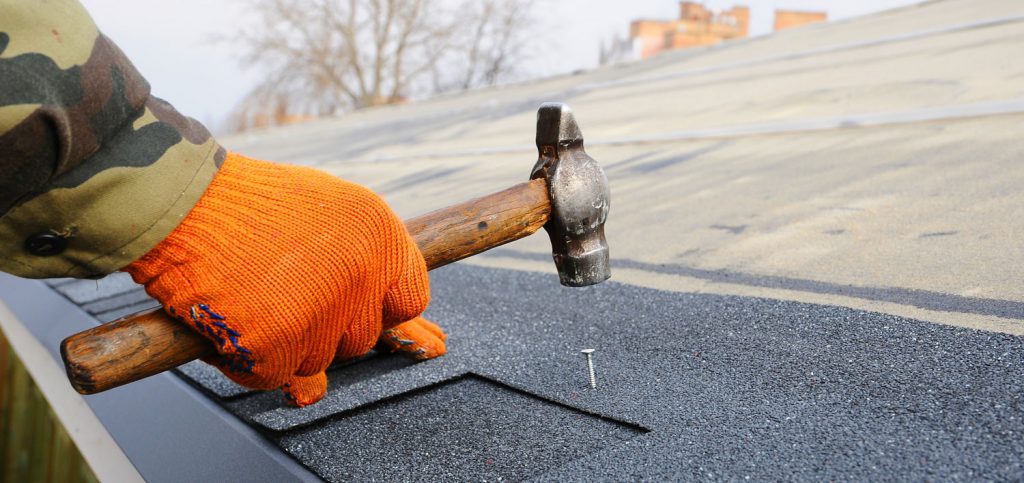
Roof decking (also called sheathing) is the structural wood skin nailed across your rafters or trusses. In most homes built since the 1970s it's 7/16-inch OSB or 1/2-inch plywood. Everything above it, underlayment, ice-and-water shield, drip edge and shingles, fastens into that wood.
Get My Free Estimate →- What Roof Decking Actually Is
- OSB vs Plywood: What's Probably Up There
- What Actually Ruins Roof Decking in Wisconsin
- Signs You Can Check Yourself
- How a Crew Decides: Replace It or Leave It
- How Many Sheets Is Normal, and What It Costs
- Will Insurance Pay for Decking After a Storm?
- Wisconsin Code, Permits and Nailing
- Is New Decking Worth It, or Just an Expense?
- Can I Just Roof Over the Old Shingles?
- Tear-Off Day: Weather, Exposure and Timeline
- Board Decking and Skip Sheathing in Older Homes
- The Bottom Line
- FAQs
If a crew pulled your shingles off and told you the decking needs replacing, here's the short version: the roof deck is the structural wood skin nailed across your rafters or trusses, and it gets replaced when it's soft, rotted, delaminated or too gapped to hold shingle nails. Not just because it's old.
That's the honest answer. Now here's everything else, including how many sheets is normal, what it actually adds to the bill, whether insurance pays, and what to do if the number feels padded.
What Roof Decking Actually Is
Roof decking, also called sheathing, is the layer of wood panels or boards fastened to the tops of your rafters or trusses. It's the roof's floor. Everything above it is attached to it.
Working from the framing up, a modern asphalt shingle roof looks like this:
- Rafters or trusses (the structure)
- Decking / sheathing (the wood skin, usually 7/16-inch OSB or 1/2-inch plywood)
- Ice-and-water shield at eaves, valleys and penetrations (a self-adhering rubberized membrane)
- Synthetic underlayment over the rest of the field
- Drip edge, flashing, starter strip
- Shingles, nailed through all of it and into the deck
That last point is the one homeowners miss. Your shingles aren't holding themselves on. Every nail relies on solid wood underneath. If the deck is punky, the nails have nothing to bite, and the whole system above it is compromised no matter how good the shingles are. That's why we treat roof decking as part of the roof, not an optional add-on.
OSB vs Plywood: What's Probably Up There
Most south-central Wisconsin homes built from the mid-1970s on have OSB, oriented strand board, which is wood strands pressed and bonded into 4x8 sheets. Homes from roughly the 1950s to 1970s tend to have plywood. Anything older may have solid 1x boards.
Both are code-legal and both perform fine on a dry, well-ventilated roof. The difference shows up when they get wet.
- OSB is more common and more cost-effective. When it stays wet it swells, especially along the panel edges, and it largely stays swollen after it dries. Those ridges telegraph through the shingles as faint lines every four feet.
- Plywood is built in cross-laminated layers. It swells too, but it tends to dry out and recover a little better. Enough water for long enough, though, and plywood delaminates, the layers separating like a soggy book.
Neither is waterproof. The only things keeping either material alive are the flashing, underlayment and shingles above it, plus attic ventilation below it.
What Actually Ruins Roof Decking in Wisconsin
Decking almost never fails from age alone. It fails from water, and in our climate the water usually arrives one of four ways.
1. A slow leak nobody noticed
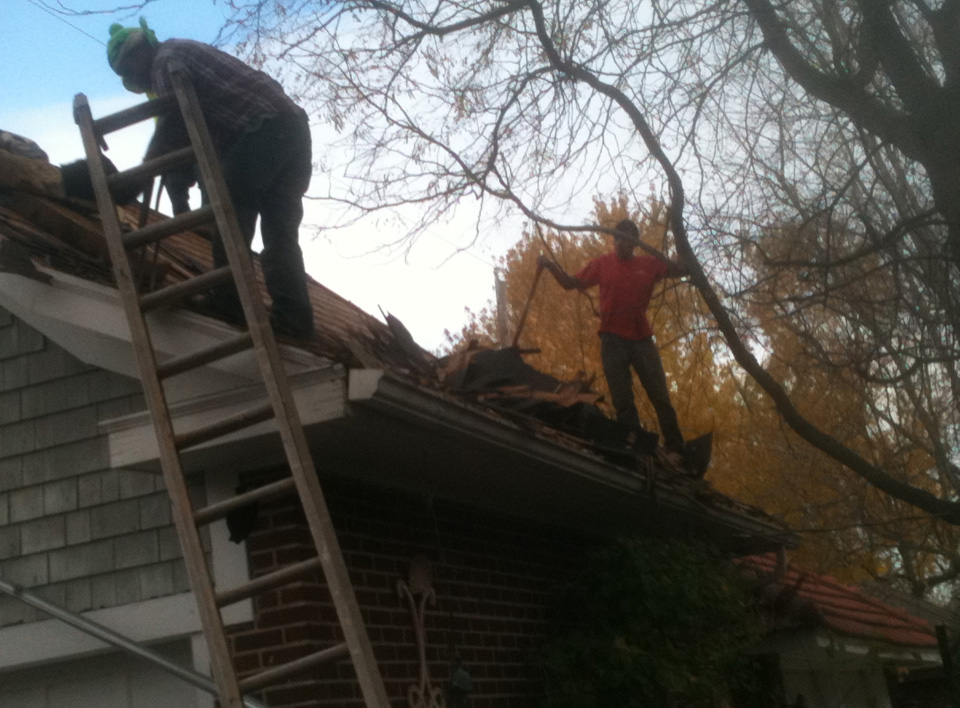
A cracked pipe boot, failed chimney flashing, a nail that backed out. Water drips into the same square foot of OSB for two or three winters. By the time you see a stain on the bedroom ceiling, that wood has soaked and dried dozens of times and it's cheese. In our tear-offs, slow leaks are the most common reason we cut sheets out, which is why a small roof repair handled early costs dramatically less than the same problem found three years later.
2. Ice dams
The Wisconsin special. Snow melts on the warm upper roof, refreezes at the cold eave, and water backs up under the shingles where gravity can't help it. If the ice-and-water shield is missing, old or too narrow, that water sits right on the deck above the gutter line.
On the 1970s ranches we reroof around Dane and Rock counties, the pattern repeats: the first two or three feet above the eave are soft while the rest of the deck is perfectly sound. On those houses we usually end up cutting out roughly a dozen sheets along the eaves, sometimes fewer, sometimes more.
3. Condensation from poor attic ventilation
This one is sneaky, and no homeowner sees it coming. Warm, moist indoor air leaks into the attic, hits the cold underside of the deck in January, and condenses. Drip, freeze, drip, freeze. The deck rots from the underside, so shingles can look fine from the driveway while the wood is failing an inch away.
Classic causes: a bath fan vented into the attic instead of outside, insulation stuffed over the soffit vents, a big ridge vent trying to pull air it can't get.
Fixing the cause, not just the wood. If you put new decking over a ventilation problem, you'll be replacing it again. Correcting it usually means installing baffles at the eaves so insulation can't choke the soffit intake, ducting bath and kitchen fans all the way outside, air sealing the attic floor (top plates, can lights, chases) so household moisture stops rising, and balancing intake to exhaust so the ridge vent has air to pull. Most of the roof-side items are a modest line item on a reroof, because the crew is already up there. The air sealing and insulation side is separate work, and worth pricing on its own.
4. Rot and carpenter ants at old penetrations
Chimneys, skylights, dead valleys, old satellite mounts. Once moisture is chronic, carpenter ants move into the softened wood and hollow it out further. Chimney crickets and masonry details on older Madison, Stoughton and Janesville homes are the usual suspects.
Signs You Can Check Yourself
You can't see the deck directly, but it leaves fingerprints:
- Ceiling or wall stains, especially in the same spot after every heavy rain or February thaw
- A sag or dip you can sight along the ridge, standing at the corner of the house looking down the roof plane
- Waves or shadows in the roof surface that weren't there a few years ago, often with granule loss over the low spots
- A musty, damp smell in the attic, or frost on the nail tips and underside of the sheathing in winter
- Daylight through gaps at the eaves, or dark staining on wood you can reach with a flashlight
Any of those is a reason to have someone look. None of them is proof the whole deck is shot.
How a Crew Decides: Replace It or Leave It
Once the shingles and underlayment are off, the deck gets walked. Four things put a sheet on the replace list:
- Flex or sponginess underfoot. If a boot press makes it move, it goes. A solid deck feels like a floor.
- Visible delamination or swelling. Puffed OSB edges, or plywood separating into layers.
- Dark water staining plus softness. Staining alone isn't a death sentence. Staining with soft wood is.
- Sagging or gapping between rafters. Panels that lost stiffness, or were never thick enough for the framing spacing.
Here's the part homeowners don't hear often enough: decking that's simply old but flat, dry and solid does not need replacing. A mid-90s OSB deck under decent shingles with a ventilated attic is usually fine.
Wavy roof: decking or trusses?
Ripples and dips between rafters are a sheathing issue, fixed with new panels. A sag that runs along the ridge, or a dip following one whole framing member, is structural: a cracked truss, a failed ridge board, undersized rafters, or a past snow load event. That's carpentry, sometimes with an engineer involved, and no amount of new OSB hides it.
How Many Sheets Is Normal, and What It Costs
A typical 30-square roof (roughly 3,000 square feet of surface) holds about 90-95 sheets. So scale matters:
- 0-10 sheets: completely normal on a reroof, especially with an ice dam or old leak history
- 10-25 sheets: plausible with chronic ice dams, a bad chimney or a hidden long-term leak, and should come with photos
- Full re-deck (90 sheets and up): real, but reserved for board decking, whole-roof condensation rot, or a deck too thin for the framing
Decking is priced per 4x8 sheet because nobody, on any roof, can see under the shingles until tear-off day. That isn't a dodge, it's physics. No honest estimator can promise zero decking sight-unseen.
Per-sheet pricing commonly lands in the range of roughly $70-$130 installed at current lumber pricing, which normally includes cutting out and disposing of the old sheet as well as fastening the new one. Sheet goods swing with the market, so treat any number you read online (including this one) as a starting point and get the rate written on your own estimate. Steeper pitch, tight access and thicker panels push it up.
Multiply it out so you can budget instead of guess:
- Ten sheets: roughly $700-$1,300 added to the job
- Twenty-five sheets: roughly $1,750-$3,250
- Full re-deck, 30-square roof: a solid four-figure line item, often in the $6,000-$12,000 range at those per-sheet numbers
A fair estimate handles the unknown with a stated per-sheet price in writing, a plain description of what triggers replacement, and photos of every section replaced. If the estimate says nothing about decking at all, that's the warning sign: the number can grow on tear-off day with no agreed rate. We break that down further in how to read a roofing estimate line by line.
The shortcut bad contractors take is worse: nailing new shingles right over soft decking, because the roof looks great at the final walkthrough. It holds a season or two. Then fasteners let go in a windstorm and you pay twice.
If a four-figure decking cost lands mid-project
Say it out loud early, ideally at the estimate, not on tear-off day. A few real options:
- Ask for the decking as its own invoice line or its own payment, separate from the roof contract
- Ask what payment or financing options the contractor can point you to before work starts
- Phase the rest of the exterior. Gutters, windows and siding can usually wait a season. The deck can't, because the shingles are already off.
- If a storm is involved, supplement the claim. Storm-damaged decking belongs in the insurance scope, not on your credit card.
Not sure what's under your shingles, or what it might add? We'll get on the roof, look in the attic, and tell you straight before you commit to anything. Free, no pressure, no obligation. Call (608) 909-9109.
How to verify the sheet count, even after the wood is covered
This is the fear nobody says out loud: how do I know they really replaced 22 sheets?
You can check, and you don't need a ladder. Go into the attic with a flashlight and look up. New sheathing is obvious from the underside: bright, clean wood with fresh nail points, against older gray, dusty or stained panels. Count the new sections yourself.
Then ask for three things: the dated tear-off photos with locations, the lumber invoice or delivery ticket, and a written change order. Wisconsin's home improvement trade practice rules expect changes to a contract to be documented in writing, and the state's consumer protection bureau takes complaints if a contractor won't produce records for work you were billed for. Honest decking work is easy to prove. Padded counts are not.
Will Insurance Pay for Decking After a Storm?
Sometimes, and it depends entirely on why the deck is bad.
- Storm-caused damage is generally covered. Hail that punched through, wind that peeled shingles and soaked the deck, a limb that broke panels.
- Rot is generally not covered. Long-term leaks, attic condensation and deferred maintenance are excluded on most homeowners policies as wear and tear or long-term water damage. You can have a legitimate hail claim and still pay out of pocket for rotted eaves.
- Code upgrades are their own category. If your deck is sound but has to be re-nailed or thickened to satisfy current requirements, that's an ordinance or law cost, paid only if your policy carries Ordinance & Law coverage. Pull out your declarations page and look under the coverage schedule, usually near Coverage A (Dwelling). It's often listed as "Ordinance or Law" with language like "10% of Coverage A limit." If you don't see that line, assume you don't have it and ask your agent.
One more practical reality: decking almost never appears in the adjuster's first estimate, because it can't be seen yet. It gets handled as a supplement after tear-off, backed by photographs, measurements and the lumber invoice. That's normal, and it's one reason we meet the adjuster on the roof during storm damage restoration work instead of mailing in paperwork later. Also remember ACV vs RCV: an actual cash value policy pays depreciated value up front and releases the rest after the work is done and documented. Your deductible applies either way.
Want a straight answer on your roof?
We'll inspect it, document everything, and tell you honestly what you're looking at, even if the answer is patch it for now. No pressure.
Wisconsin Code, Permits and Nailing
Sheathing thickness is tied to framing spacing. Wisconsin's Uniform Dwelling Code (the SPS 320-325 rules for one- and two-family homes) sets minimum panel thickness based on rafter or truss spacing. On 24-inch centers, 7/16-inch panels are the common minimum for asphalt shingles. Thinner or badly deteriorated panels on wide spacing get replaced, not patched.
Two layers is the ceiling. Wisconsin follows the model residential code's re-cover rule: you can't add a new covering over a roof that already carries two applications of roof covering. Your local building inspector will confirm that in one phone call. A third layer isn't an option, it's a full tear-off, which also means your deck finally gets seen.
Fastening matters as much as thickness. Panels need a proper fastening schedule into the framing with correct edge spacing, and new sheets have to land on supported edges, not float mid-span. Shingle nails then need to penetrate the deck properly, which is exactly what manufacturers audit when a warranty claim comes in. That part of the install is not negotiable on a GAF Master Elite system.
On permits: requirements vary by municipality, and structural sheathing work is more likely to require one than a straightforward shingle swap. Ask who pulls the permit and whether an inspection is scheduled. A contractor who shrugs at that question is telling you something.
Is New Decking Worth It, or Just an Expense?
It's the foundation the money you already spent sits on.
New decking doesn't add years to a shingle by itself. What it does is let everything above it perform as designed. Shingle wind ratings assume fasteners are holding in sound, nailable wood. Manufacturer system warranties assume a proper substrate. Ice-and-water shield needs a flat, continuous surface to bond to, and it will not seal reliably over gapped boards or swollen OSB edges.
It also opens doors. A sealed roof deck is a core requirement of the FORTIFIED roof standard, which is worth asking about if you want a roof built for hail and straight-line wind rather than just built to code.
Can I Just Roof Over the Old Shingles?
Sometimes physically, rarely wisely. An overlay leaves the deck unseen and unfixed, adds weight, telegraphs every old wave and blister through the new shingles, and forces longer nails through a soft sandwich instead of biting clean wood. It also makes the eventual tear-off more expensive. In our experience, skipping the deck check is one of the most common reasons a five-year-old roof starts leaking.
Tear-Off Day: Weather, Exposure and Timeline
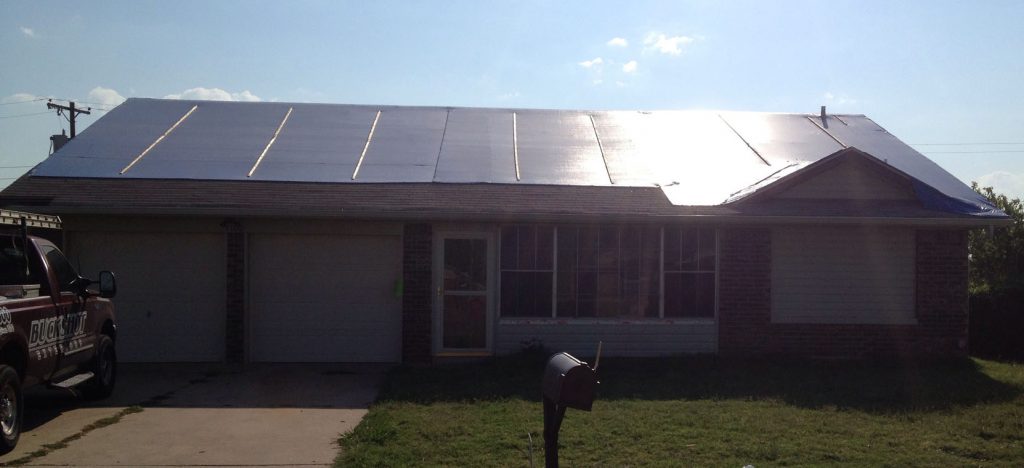
Your house does not sit open. Crews work in sections, expose only what they can dry in that day, and keep tarps staged for a pop-up storm. Bad wood is cut out and new panels go down right away, then underlayment and ice-and-water shield. A roof should be dried in by the end of every working day, not left naked overnight.
Time impact is usually small. A handful of sheets adds an hour or two. Twenty-plus sheets can add most of a day. A full re-deck typically adds a day, sometimes more with steep pitch or tight access. If decking pushes the job out, you should hear it the morning it's discovered, not at the invoice.
Board Decking and Skip Sheathing in Older Homes
If your house predates roughly 1960, you may not have panels at all. Many older neighborhoods around Madison, Monroe and Evansville have 1x board decking, sometimes with deliberate gaps (skip sheathing, originally built for wood shakes that needed airflow).
Boards can be structurally sound and still be a problem for asphalt shingles. Manufacturers specify fasteners hitting solid wood with adequate penetration, and they won't warrant nails driven into a gap or a splitting board edge. Boards also cup, twist and split over decades, which telegraphs waves into new shingles.
The usual fix is new solid sheathing over the boards, or replacing boards outright where they're shot. Budget for it honestly: overlaying an entire roof is essentially a full re-deck's worth of material and labor, so on a 30-square roof it belongs in that four-figure range above. Ask for it as a separate line item on any older-home asphalt shingle roof replacement quote, so you can see exactly what it costs and decide with real numbers.
The Bottom Line
Decking is the one part of your roof you can't check from the ground, and you can only see part of the underside from the attic. So two things protect it: fixing small leaks before they become long leaks, and getting attic ventilation right so the deck isn't being rained on from below every winter.
A free inspection is the cheapest way to find out where you stand. We'll check the flashings and the eave areas where ice dams do their damage, go into the attic with a flashlight to look at the underside of the sheathing, and show you photos of whatever we find. If your deck is fine, we'll say so and put it in writing. You can see the kind of work and documentation we produce on our recent projects page.
Buckshot Exteriors is a family-owned, GAF Master Elite certified contractor handling residential roofing across Dane, Rock and Green counties, and if your problem started with a storm, we'll meet your insurance adjuster on the roof and document it with you.
Call (608) 909-9109 for a free, no-pressure inspection, or send us a message and we'll get back to you. It costs nothing to know what's under your shingles.
Get a straight answer on your Madison roof
Wisconsin storm season and insurance non-renewal letters do not wait. Get a free, no-obligation inspection and an honest assessment of exactly what your roof needs, even if the answer is to wait.