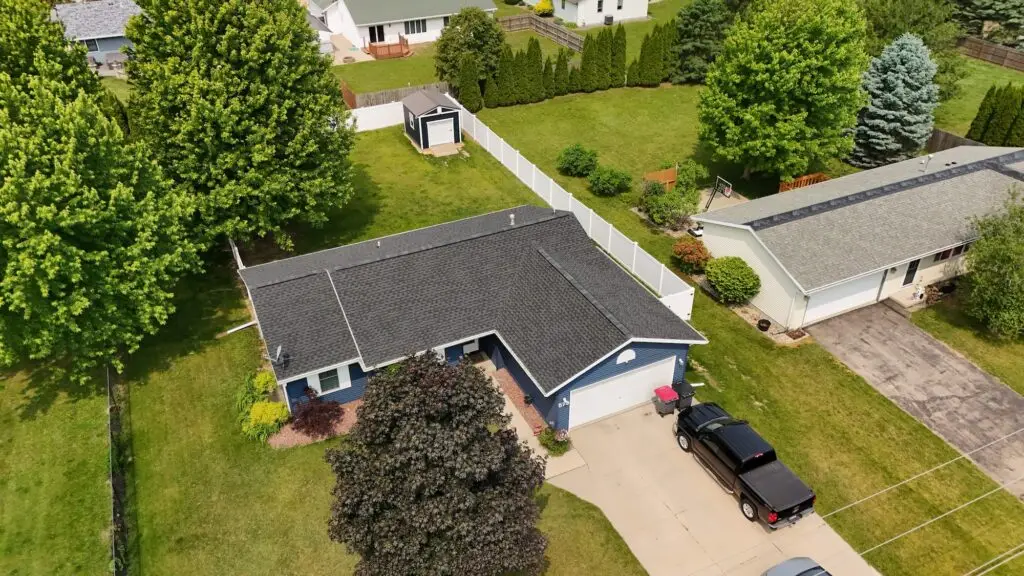
For a standard architectural shingle roof with a full tear-off, bids around Madison, Janesville and Monroe commonly land somewhere near $450-$800 per square (100 square feet) installed, which puts a typical 22-30 square house in the neighborhood of $10,000-$22,000. The low end is a single-layer, walkable ranch with few penetrations. The high end is steep pitch, two tear-off layers, several valleys and a chimney to reflash. Class 4 impact-rated or premium shingles and decking replacement push it higher. These are general market ranges that move with material pricing, not a quote.
Get My Free Estimate →- First, the number: what this actually costs around here
- The scope line: squares, layers and pitch
- Materials: brand and product line, not just "shingles"
- Ice-and-water shield: the line that separates Wisconsin roofs
- Flashing, drip edge, gutters and penetrations
- Ventilation: intake and exhaust, both
- Two warranties, not one
- If insurance is paying: reading an ACV/RCV scope
- Permit, lien rights, payment: the boring lines that protect you
- What a siding estimate should spell out
- Red flags that separate a professional estimate from a rushed one
- Five questions to ask about any line you do not understand
- Get a second set of eyes on your estimate, free
- FAQs
A roofing or siding estimate should tell you exactly what you are buying: how much roof, which products by name, what goes under the shingles, which flashings get replaced, how the attic breathes, who warranties the labor, when you pay, and how long the price holds. If your quote is one line and one number, you do not have an estimate. You have a price.
That matters because the bottom line is the worst way to compare bids. Two quotes at $14,800 can be completely different jobs. One includes ice-and-water shield at every eave and valley, synthetic underlayment, all new step flashing and balanced ventilation. The other reuses old flashing, lays 15-lb felt, and leaves the ventilation alone.
Same price. One of those roofs survives a Wisconsin February. The other gives you an ice dam and a stained ceiling in year three.
Here is how to read what is in front of you, line by line, whether the quotes came from us or from three other companies.
First, the number: what this actually costs around here
Most people reading an estimate are really asking one thing. Is this price sane?
In Dane, Rock and Green counties, a standard architectural shingle roof with a full tear-off usually bids somewhere around $450-$800 per square installed (a square is 100 square feet of roof). That puts a typical 22-30 square house in the range of $10,000-$22,000.
Whole-house siding in this market commonly runs about $5-$12 per square foot of wall area for vinyl and roughly $10-$18 for fiber cement, assuming that number includes tear-off, new housewrap, trim, J-channel and soffit/fascia work. A two-story with 1,800-2,500 square feet of wall area lands in the ballpark of $12,000-$28,000 in vinyl, more in fiber cement. If a siding quote looks cheap, check whether it is siding-over-existing with no wrap and no trim replacement, because that is usually the difference.
To be clear about where those numbers come from: they are general market ranges for south-central Wisconsin, not a quote, and they move with material costs and with the specifics of your house. Our roof replacement cost breakdown shows how the pieces add up.
Where you land in the spread is not random. The low end is a single-layer tear-off on a walkable ranch with a couple of pipe penetrations and a driveway the dumpster can sit in. The high end is a 12/12 pitch with four valleys, a chimney that needs new counter flashing, two layers coming off, and staging because the lot drops away behind the house. Standing seam metal is a separate animal, often two to three times asphalt.
Why bids on the same house spread so far apart
- Tear-off layers. Two layers of shingles is roughly double the labor and dumpster weight of one.
- Pitch and access. A two-and-a-half story near the Capitol needs harnesses, staging and slower work than a ranch in Stoughton.
- Roof complexity. Valleys, dormers, skylights and chimneys are labor and flashing, not shingle area.
- Product grade. Basic 3-tab, standard architectural laminate, and premium or Class 4 impact-rated shingles are three price points.
- What is actually included. Ice-and-water shield, new flashing, ventilation, permit, decking allowance. Most of the spread hides right here.
- Overhead you cannot see. A company carrying real workers' comp on a real crew costs more than a truck and a ladder. It costs less when something goes wrong.
If one bid is dramatically below the rest, something got left out. Find it before you sign.
The scope line: squares, layers and pitch
This defines the size of the job. A professional estimate states roof area in squares, how many existing layers come off, and usually the pitch and number of stories.
You should also see whether this is a full tear-off to the decking or a layover. Note that building code allows no more than two roof covering layers on most homes, which is exactly why a house that already has a layover cannot legally get a second one and has to be torn off. In our climate we favor tear-off anyway. You cannot inspect decking you never uncovered.
How to settle a square-footage disagreement
If one bid says 28 squares and another says 34, do not just pick one. Ask each bidder how they measured and ask to see it.
Most companies now pull an aerial measurement report (EagleView, Hover and similar) that lists squares, pitch, and lengths of ridge, valley, eave and rake. Ask for the PDF. Others hand measure the footprint and apply a pitch multiplier, which is perfectly accurate when done carefully.
Then compare three things: waste factor (10-15 percent is normal, higher on cut-up roofs), whether the garage, porch roof and dormers were counted, and whether anybody actually got on the roof. Six squares of difference is almost always one of those three, and a contractor who cannot explain his number in one minute measured from the driveway.
The decking contingency
Look for a line like "decking replacement, $X per 4x8 sheet as needed." That is a decking contingency, and it is the mark of an honest estimator.
Nobody can see under your shingles from the ground. Freeze-thaw cycles, old ice dams and slow valley leaks cause soft, delaminated sheathing more often than homeowners expect. A quote with no decking language means either a surprise change order or new shingles nailed into rotten plywood.
While you are there, ask how change orders work. Added scope should require your written approval before the crew proceeds, not a line added to the final invoice.
Do you actually need the whole roof?
Plenty of people holding an estimate are still not sure they need a replacement. Fair question, and the honest answer depends on age and failure pattern.
Isolated damage on a roof with years of life left (a cracked pipe boot, wind-lifted shingles on one slope, failed step flashing at a dormer) is genuinely a roof repair, and a good contractor will say so. Widespread granule loss with exposed mat, shingles that crack when you flex them, multiple leaks in different areas, or a second layer already up there points to replacement. Our residential roofing page walks through both paths.
Materials: brand and product line, not just "shingles"
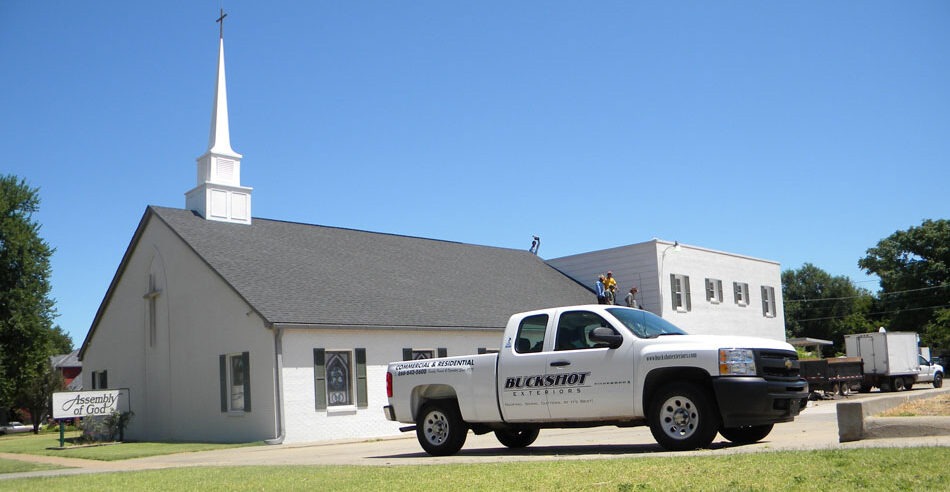
"Architectural shingles" is a category, not a product. Your estimate should name the manufacturer, the specific product line, and the color.
That specificity is what lets you compare:
- Shingle line and wind rating. "Dimensional shingles" tells you nothing about which.
- Impact resistance. If Class 4 impact-rated shingles are quoted, it should say so by name. In hail country that rating can affect your premium with some carriers.
- Underlayment type. Synthetic versus 15-lb felt is a real difference in tear resistance and in how your deck fares if a storm rolls in mid-project.
- Fastener spec. Nail type and count per shingle. High-wind patterns (six nails instead of four) are often required by the manufacturer to keep the wind warranty valid.
If the line just says "shingles, installed," nobody can evaluate that bid.
Ice-and-water shield: the line that separates Wisconsin roofs
This is the most skipped line item in our region and the one that costs homeowners the most.
Ice-and-water shield is a self-adhering waterproof membrane that bonds to the decking and seals around nail penetrations. At the eaves it stops water backed up behind an ice dam from getting into the house. In valleys and around penetrations it protects where water concentrates.
On the code side, Wisconsin's Uniform Dwelling Code carries the residential ice dam protection requirement in its weather-protection-for-roofs provisions (SPS 321.28): on a shingled roof with a slope of 4:12 or less over a heated area, the ice barrier membrane has to extend at least 30 inches up the roof slope from the roof edge, and at least 12 inches up the slope beyond the inner face of the exterior wall. The UDC is uniform statewide for one- and two-family dwellings. Municipalities enforce it, and individual inspectors differ in what they want to see documented, but local ordinances generally cannot be more restrictive than the UDC (narrow exceptions exist only through a DSPS petition process, for things like local snow or wind load). So that requirement reads the same in Madison as it does in Janesville or Monroe.
Do the math on your own house. With a 12 to 24 inch overhang plus wall thickness, a single 36-inch course barely makes it, and on a low-pitch roof it often does not. Two courses at the eave is common and correct on plenty of homes here.
Story-and-a-half houses from the 1920s around Monroe, Evansville and Madison's older neighborhoods are the classic case. We see the same thing every winter: one 36-inch course that stops a few inches short of the wall line, and when the tear-off starts, the first three or four feet of sheathing along the eave comes up delaminated and black. That is not bad luck. That is a shortcut from the last roof showing up 12 years later.
Your estimate should state where the membrane goes and how far up:
- Eaves, with coverage width or number of courses noted
- All valleys
- Around chimneys, skylights and wall intersections
"Ice-and-water as needed" is vague. No mention of it at all, in southern Wisconsin, is a bid to skip it.
Flashing, drip edge, gutters and penetrations
Flashing is the metal that directs water away from joints, and it is where most real leaks start. It is also where rushed jobs cut corners, because reusing old flashing is faster than replacing it. In our experience, the leak a homeowner assumes is "the shingles" is usually a cracked pipe boot or step flashing that somebody caulked instead of replaced on the previous roof.
Look for named lines:
- Drip edge at eaves and rakes, new metal, color noted
- Step flashing where the roof meets a wall, dormer or chimney side
- Counter flashing or a reglet cut at masonry chimneys
- Pipe boots and vent flashings, new, not reused
- Valley treatment, open metal versus closed-cut, specified
Gutters deserve a sentence of their own, because they are usually excluded from a roofing quote and homeowners assume otherwise. Ask two things. First, does the estimate include gutter apron at the eave, the flanged metal that carries water off the deck and into the trough instead of behind it. Drip edge alone, with water dripping behind an old trough, is a common ice dam and fascia rot pattern here. Second, if your gutters are already sagging, bent from ice, or undersized for the roof area, replacing them during the roof is the cheapest time to do it, since the crew is already up there and the edge detail can be built as one system.
Ventilation: intake and exhaust, both
A proper estimate treats ventilation as a system. Ridge vent alone is not a system.
You need balanced exhaust (ridge vent or box vents) and intake (soffit vents, or edge intake where soffits are blocked or nonexistent). Without intake, a ridge vent pulls air out of your house. In a Wisconsin winter that means warm, moist air hitting cold sheathing, which becomes attic frost, moldy decking and ice dams at the eave.
Line items to find: ridge vent in linear feet, intake type and quantity, and whether bath and kitchen fans terminate through the roof instead of dumping into the attic.
Two warranties, not one
Every estimate should name two separate warranties. Most name only one.
Manufacturer warranty tier
Enhanced coverage generally requires a full system (underlayment, starter strip, hip and ridge cap, ventilation) from one manufacturer, installed by a certified contractor. We are a GAF Master Elite certified contractor, which is what makes the upper warranty tiers available to register in the first place. A non-certified installer cannot register them, no matter what the salesperson says.
Ask for the warranty by its actual name, confirm it gets registered after the job, and read the exclusions. We break the tiers down in roof warranties explained for Wisconsin homeowners.
The contractor's workmanship warranty
This is the line homeowners miss, and it may be the most consequential one on the page. Manufacturer coverage handles defective product. It does not cover a nail driven in the wrong place.
The signed contract should state how many years of labor coverage you get, what it covers (installation defects and resulting leaks) and what it does not (storms, foot traffic, someone else's satellite dish), whether it transfers when you sell, and who honors it if the company changes hands. Terms range from one year to lifetime-of-ownership. A 25-year workmanship promise from a company with no local history is just a sentence.
Holding two or three bids and not sure what you are comparing? Bring them to the conversation. We will do a free on-site inspection, measure the roof ourselves, and walk you through what each line means, including the lines on the other company's estimate. To be clear about what that is not: we are not going to bad-mouth anybody by name, and it is not a line-item bidding war. It is just helping you understand what you are actually comparing. No cost, no obligation. Call (608) 909-9109.
Free on-site inspection · Family-owned since 1979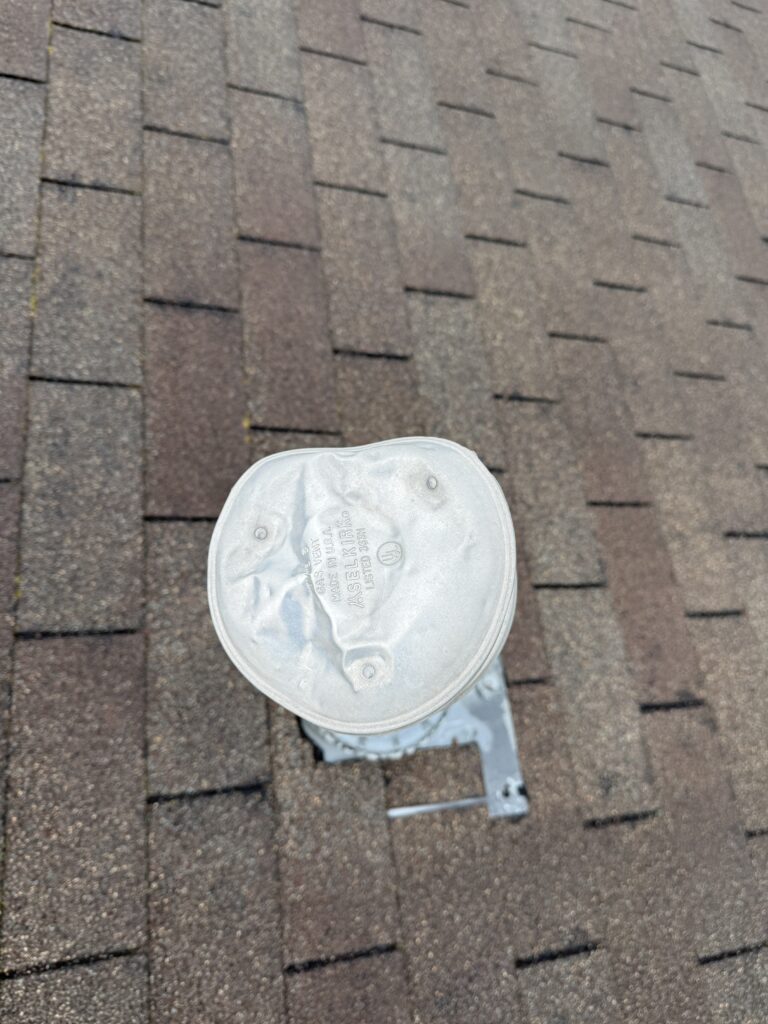
Want a straight answer on your roof?
We'll inspect it, document everything, and tell you honestly what you're looking at, even if the answer is patch it for now. No pressure.
If insurance is paying: reading an ACV/RCV scope
If hail or wind drove this project, you are probably not holding a normal estimate. You are holding an insurance scope, usually generated in Xactimate, and it reads differently.
The vocabulary you need:
- RCV (replacement cost value): what it costs to replace the roof today at current local pricing.
- Depreciation: value subtracted for the age and wear of the old roof.
- ACV (actual cash value): RCV minus depreciation. On most policies this is the first check.
- Recoverable depreciation: the held-back amount released after the work is completed and invoiced. If your policy is ACV-only, that money never comes, so read your declarations page.
- Deductible: your share, subtracted from the payout, and your legal obligation under the policy. Anyone offering to waive it, eat it, or hide it in padded line items is proposing fraud with your name on the claim.
- Supplement: items found after the adjuster's visit (extra decking, code-required ice barrier, a missed flashing detail) submitted with photos for additional approval.
Filing is a decision, not a reflex
Weather claims are generally rated differently from at-fault claims, and one legitimate hail claim rarely moves an individual policy on its own. But carriers do watch claim frequency, and in areas taking repeated hail losses, the response can be a higher wind/hail deductible at renewal, a roof payment schedule that pays only actual cash value on older roofs, or non-renewal.
So get the roof inspected and documented before you file. If the damage is cosmetic granule scuffing rather than functional bruising and cracked mat, or the real repair cost is close to your deductible, filing may not be worth it. We will tell you which one you have, and we have no problem telling you not to file.
When a claim is warranted, read the scope line by line like a retail bid. Adjuster scopes routinely miss drip edge, code-required ice barrier width, ridge vent, or the correct number of pipe boots. Those are legitimate supplement items, not upsells, and it is why we meet the adjuster on the roof. Our hail and storm damage restoration page explains that documentation process, including the matching and continuous-elevation arguments that come up constantly on siding claims.
Permit, lien rights, payment: the boring lines that protect you
The unglamorous lines tell you the most about who you are hiring.
Most municipalities in south-central Wisconsin require a permit for a full roof replacement, and the quote should say whether the permit is included and who pulls it. In Wisconsin, a contractor obtaining that permit on a one- or two-family home needs a Dwelling Contractor certification, with a Dwelling Contractor Qualifier credential held by an individual in the business. Both are free to verify on the state DSPS license lookup, and you should verify them. Then ask for a certificate of insurance sent directly from the carrier or agent showing general liability and workers' compensation, because a PDF handed over by a salesperson proves nothing. Here is what licensed, bonded and insured really means.
Wisconsin also has a lien statute worth understanding before you write any checks. Contractors performing residential improvement work are generally required to give the owner a written Notice of Lien Rights, usually inside the contract or early in the job. That notice is normal and expected, and its absence says the paperwork is careless. On the back end, ask for signed lien waivers from the material supplier and any subcontractors before you make final payment, so an unpaid supplier cannot lien your house after you have already paid in full.
The rest of the fine print to read: disposal and cleanup (dumpster, tarped landscaping, magnetic nail sweep, gutter cleanout), the start window and how weather delays are handled, how long the price holds, and the payment schedule. Most single-family asphalt roofs here are a one to three day job, though April and November in Wisconsin move calendars. Payment should run deposit, then milestones, then final payment after completion and inspection, with nothing large in cash before materials are delivered and never paid in full up front.
An estimate is not a contract
This trips people up. An estimate is a priced scope of work. It is not binding, and a handshake on the number does not lock in the terms that actually protect you.
Before you sign, make sure these four things appear in the signed contract, not just on the quote sheet:
- Warranty terms. Workmanship years, what is excluded, whether it transfers, and the manufacturer warranty tier by name with who backs each one.
- Change-order process. Your written approval required before any added scope proceeds, with the unit price already stated.
- Payment schedule. Deposit amount, milestone triggers, and what "final" depends on (completion, cleanup, inspection).
- How long the estimate stays valid. Shingle and steel pricing moves, so expect a validity window from every bidder, and expect it in writing.
Winter installs and the cold-weather sealing question
Asphalt shingles can be installed in Wisconsin winters, and plenty of good roofs go on in December. The catch is the factory adhesive strip, the band of sealant that glues each course down. Below a certain temperature it will not bond until warmer weather comes back, so the crew has to hand-seal with roofing cement at the exposed areas: eaves, rakes, hips, ridges, valleys and around penetrations. Shingles are also more brittle in the cold and handle rougher.
The other cost is schedule. Weather windows shrink, a dry day with no wind is not guaranteed, and a tear-off cannot sit open. If you are holding an autumn estimate, ask the contractor point blank how his crew handles cold-weather sealing and what his dry-in plan is if the forecast turns. If you have an active leak, do not wait for spring. Water in the decking does not pause for the season.
Exclusions and your side of the job
Read the exclusions twice. Gutters, attic insulation, interior drywall or ceiling repair from an existing leak, and chimney masonry are usually separate. If your ceiling is already stained, ask point blank whether that repair is in this price.
Then confirm the homeowner side: cars out of the driveway, fragile items off the walls (tear-off shakes the house), pets inside, and who protects the A/C condenser and satellite dish.
Financing: compare the loan, not the monthly payment
Plenty of people choose between two $15,000 bids based on payment, so read that paperwork with the same suspicion. Ask for APR, term length, total finance charge over the life of the loan, and whether there is a prepayment penalty.
Watch two specific traps. A 0 percent promotional offer is often deferred interest, meaning if the balance is not cleared inside the promo window, interest back-charges to day one. And some contractors price the job higher when you use promotional financing to cover the lender fee, so ask whether the price changes depending on how you pay. If a salesperson leads with a monthly number and gets vague about the APR, that is your answer.
What a siding estimate should spell out
Same logic, different components, and vagueness costs more here because siding failures happen inside the wall where you cannot see them.
The core items are scope by elevation, tear-off versus siding over, the moisture barrier, insulation board if any, the specific product line and color, trim and J-channel, fastening spec, caulking scope, and window and door flashing. Two of those decide whether the wall stays dry for 30 years: the housewrap and how its seams and window openings are flashed, and the fastening spec, because vinyl nailed too tight buckles when it expands, and we swing from 15 below to 95 above in this state.
Here is the difference between a line you can trust and a line you cannot:
| Vague line | What a real line looks like |
|---|---|
| "Siding, whole house" | Each elevation with square footage, and whether garage, gables and dormers are included |
| "New housewrap" | Named product, seams taped, penetrations flashed, sill pans at window openings |
| "Trim included" | Corner posts, window and door trim, soffit and fascia by linear foot |
| "Vinyl siding, beige" | Manufacturer, product line, profile (Dutch lap, board and batten), panel thickness, color name |
| "Caulk as needed" | Which joints, with which sealant |
| "Remove old siding" | Tear-off to sheathing, rotted sheathing replaced at $X per sheet, inspection of wall cavity |
How materials behave in our freeze-thaw climate is covered on our siding page, including which options hold color and which panels get brittle.
Red flags that separate a professional estimate from a rushed one
One lump sum with no material specs
- No decking contingency or inspection language
- No ice-and-water shield mentioned
- No permit line where the municipality requires one
- "Manufacturer warranty" with no tier named, and no workmanship warranty at all
- No validity window and no change-order process
- Same-day signing pressure, a discount that expires tonight, or a big cash deposit before materials are ordered
Door-knockers after a hail event, and your right to cancel
After a storm rolls through Dane, Rock or Green county, out-of-state crews follow. Some are fine. Many are gone by spring.
Their paperwork usually looks different: an "authorization to contract" or contingency agreement instead of a priced estimate, a blank total tied to "whatever insurance pays," an out-of-state address, a cell number instead of an office, and no Wisconsin dwelling contractor credential. Ask for that credential number, a carrier-issued certificate of insurance, and a local address you could drive to in three years when a shingle lifts. Then read reviews with local names on them, like the ones on our customer reviews page.
Here is the protection most homeowners never hear about. Under Wis. Stat. 100.65, if you sign a contract to repair or replace a roof or other exterior work that is to be paid for under a property insurance policy, you may cancel that contract before the end of the third business day after you receive written notice from your insurer that the claim has been denied in whole or in part. That is your out from a contingency agreement signed on the porch when the claim does not go the way the salesman promised. Know it before you sign, and keep the insurer's denial letter with the date on it.
Five questions to ask about any line you do not understand
- "What exactly is included in this line, and what is excluded?"
- "Which manufacturer and product line is this, and what warranty tier does it qualify me for?"
- "How far past the exterior wall line does the ice-and-water shield run, and does it cover all valleys?"
- "Which flashings are you replacing versus reusing, and are the pipe boots new?"
- "How many years is your workmanship warranty, is it transferable, and who supervises my job on site?"
Any contractor who gets irritated by those questions has told you something useful.
Get a second set of eyes on your estimate, free
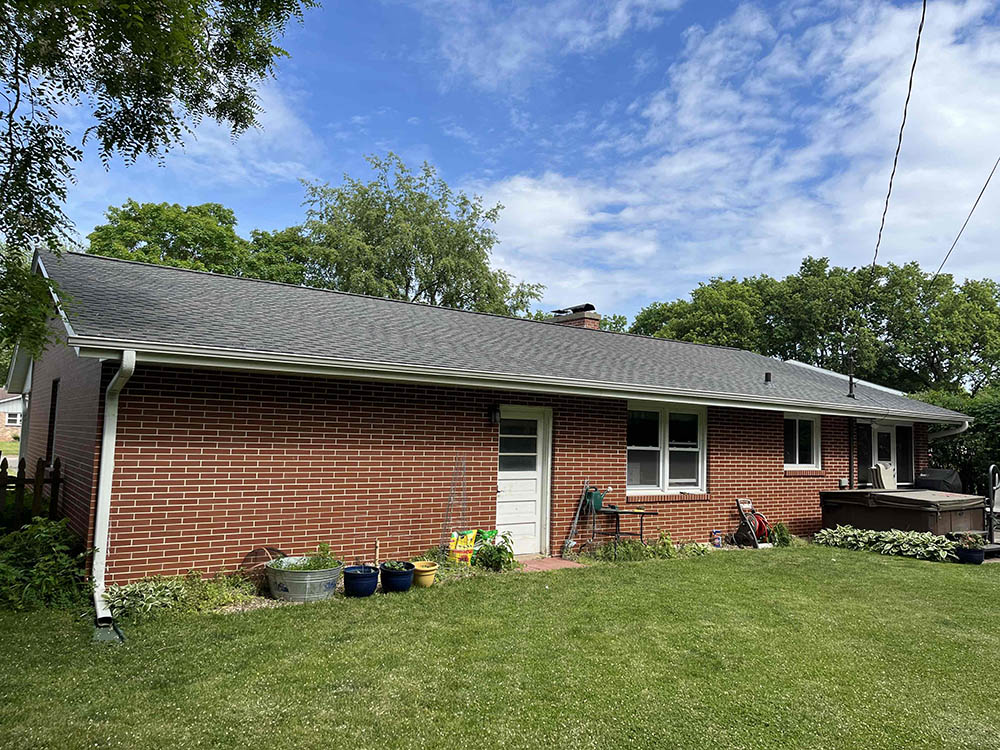
You should not have to become a roofing expert to spend $15,000 responsibly. But you should be able to see what you are paying for.
Buckshot has been doing roofs, siding, gutters and windows for families in this part of Wisconsin since 1979. You can see the kind of work that comes with that in our recent projects and in the reviews homeowners have left on Google, Birdeye, Angi and HomeAdvisor.
Here is what happens when you call. We come out, measure the roof, get into the attic if there is access, photograph what we find, and leave you a written itemized estimate you can hold up against anyone else's. If a storm is involved, we will meet your adjuster on site and document it together. The inspection costs nothing, you are not signing anything that day, and if another company's bid is the better value, we will say so.
Call (608) 909-9109 or request a free inspection. Straight answers about every line on your estimate, no pressure attached.
Get a straight answer on your Madison roof
Wisconsin storm season and insurance non-renewal letters do not wait. Get a free, no-obligation inspection and an honest assessment of exactly what your roof needs, even if the answer is to wait.