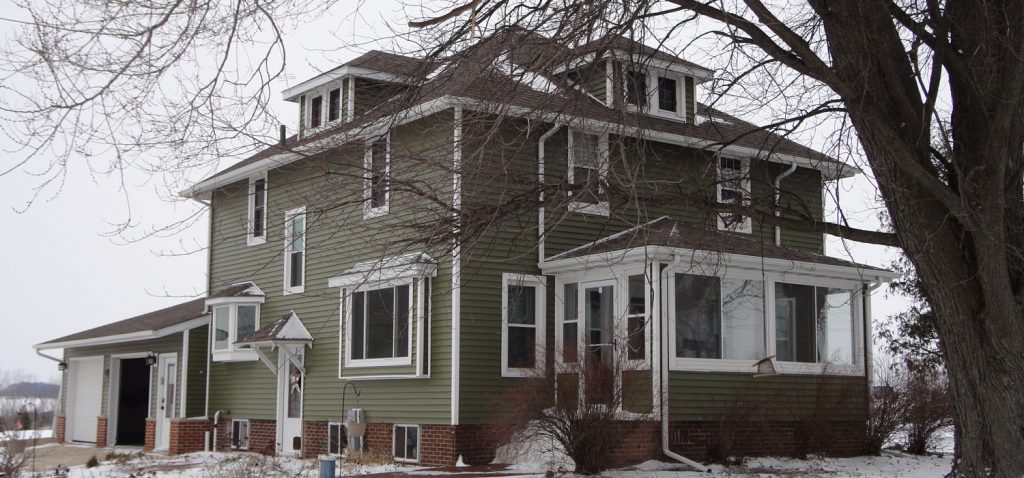
For a typical Madison home, patching a small section of rotted fascia runs roughly $200-$600. That range moves based on how many linear feet are involved, how steep the roofline is, and whether rafter tails need work too. Wrapping existing wood fascia in aluminum averages $800-$2,000. Full fascia and soffit replacement on a mid-size home typically falls in the $2,500-$6,000 range. These are planning estimates, not hard quotes. The only way to know your actual cost is to have someone inspect the boards.
Get My Free Estimate →- What Fascia and Soffit Actually Do
- Why Fascia and Soffit Fail in Wisconsin
- Warning Signs You Should Not Ignore
- Why You Cannot Ignore Rot Once It Starts
- Repair vs. Wrap vs. Full Replacement
- Warranties and What to Ask About Them
- Financing Options for Larger Jobs
- Permits and Structural Repairs
- How Long Does the Job Take?
- How to Vet a Contractor for This Work in Wisconsin
- How Fascia Work Ties Into Your Gutter and Roof Projects
- What to Expect From a Fascia Repair Estimate
- Serving Madison and Dane County
- FAQs
If you are seeing peeling paint along your roofline, a gutter that seems to be pulling away, or soft wood when you press on the boards at the eave, you likely have fascia or soffit damage. Left alone, that damage spreads, and what starts as a few hundred dollars can turn into a multi-thousand-dollar project once rot reaches the rafter tails.
Here is what you need to know about fascia and soffit repair in Madison and Dane County, including what causes it, how to spot trouble early, and what realistic repairs cost.
What Fascia and Soffit Actually Do
These two components do more than make your roofline look finished. The fascia is the vertical board that runs along the edge of your roof, right where the gutters attach. It caps the ends of your rafter tails and gives the gutter something solid to hang from. The soffit is the horizontal panel underneath the eave, bridging the gap between the fascia and your house wall.
Together they protect the rafter tails from direct weather exposure. Just as importantly, the soffit provides ventilation to your attic. Those small perforated panels let cool outside air flow in along the eave so your attic can breathe. Without that airflow, heat and moisture build up, which is bad for your shingles, your insulation, and eventually your decking.
Why Fascia and Soffit Fail in Wisconsin
Wisconsin winters are hard on rooflines in ways that milder climates never deal with. Here are the four failure modes we see most often in the Madison area.
Ice Dams Backing Water Into the Fascia
An ice dam forms when heat escaping from your attic melts snow on the upper roof, and that meltwater refreezes at the cold eave. The pooled water has nowhere to go except sideways, and it works its way behind the gutter and into the fascia board. One bad winter season is sometimes enough to start the rot process.
Clogged or Overflowing Gutters
When gutters fill with leaves and debris, water spills over the back edge and runs straight down the fascia face. A fascia board that gets soaked repeatedly, then freezes, then thaws, does not stay solid for long. This is the most common cause of fascia rot we see on Madison homes, and it is entirely preventable.
Ventilation-Starved Soffits
If a previous contractor painted over the soffit perforations, or if the original builder used solid (non-vented) panels in the wrong locations, the attic loses its intake air. Moisture builds up, condensation forms, and the wood deteriorates from the inside out. You might not see it until a panel sags or an animal finds the soft spot.
Wildlife Entry
Squirrels, house sparrows, and European starlings are relentless in Dane County. They probe every gap and weak point at the roofline. A soffit panel that is slightly loose or a corner where the fascia has pulled away from the rafter tail is an open invitation. Once animals get in, they chew through insulation, nest in the eaves, and create damage well beyond the original entry point.
One important note: if animals are actively living in your soffit or eave cavity, they need to be removed humanely before the opening is sealed. Sealing an occupied cavity traps animals inside, which creates a whole new problem. A licensed wildlife removal company handles this first, and then the soffit repair follows. We can help coordinate the sequence so the repair does not get done prematurely.

Warning Signs You Should Not Ignore
You do not need to get on a ladder to spot most of these. Stand back and look at your roofline from the yard.
- Peeling or bubbling paint on the fascia board, especially near the gutter brackets
- A gutter that is sagging or pulling away from the house, even if the spikes or screws look intact
- Dark staining or water marks running down the fascia face below the gutter seam
- Soft, spongy wood if you can reach the fascia from a ladder (it should feel firm, like healthy lumber)
- Gaps or bent panels in the soffit, or sections that have dropped down slightly
- Wasps building nests inside the soffit cavity (they love the protected space once a gap opens)
- Scratching or chattering sounds near the eave, especially at dawn or dusk
Any one of these is worth a closer look. More than one together usually means the damage is already underway.
Why You Cannot Ignore Rot Once It Starts
Wood rot does not stay put. It spreads along the grain and follows moisture pathways. The fascia board is nailed directly to the rafter tails, and those tails are the exposed ends of the same rafters that hold up your roof deck. Once rot migrates from the fascia into a rafter tail, you are now looking at structural repairs, not just cosmetic ones.
We have opened up fascia on Madison homes expecting a simple board swap and found three or four rafter tails that needed to be sistered (reinforced with new lumber alongside the damaged one) before anything else could go on. That is not a scare tactic. It is just what happens when water gets into wood framing and sits through a Wisconsin winter.
Catching it at the fascia-board stage is dramatically cheaper than catching it at the rafter-tail stage.
Repair vs. Wrap vs. Full Replacement
Not every fascia problem requires tearing everything out. Here is how to think through the options.
Spot Repair
If the rot is limited to one or two sections and the surrounding wood is still solid, a good carpenter can cut out the bad section, sister the rafter tail if needed, and splice in new lumber. This works well when the damage has a clear cause (one bad gutter seam, one ice dam spot) and has not spread far.
Realistic ballpark for spot repair: $200-$600. That range is driven by how many linear feet are affected, the pitch and access difficulty of your roofline, and whether any rafter-tail work is needed. These are rough planning figures, not a quote.
Can a handy homeowner do this themselves? A small section of fascia on a single-story home with easy ladder access is within reach for a skilled DIYer who is comfortable working at height and can identify whether the rafter tails are sound. The risk is underestimating the damage. What looks like a two-foot bad section sometimes opens up to reveal six feet of rot once you start pulling boards. If you are not sure what you are looking at, a professional inspection first is money well spent.
Aluminum Wrap (Capping)
Aluminum capping involves covering existing wood fascia with formed aluminum coil stock, typically .019 or .024 gauge. The heavier .024 gauge resists denting and holds its shape better through Wisconsin's freeze-thaw cycles, which matters when ice and debris are sliding off the roof edge. The aluminum is custom bent to fit your fascia profile, locks over the top edge, and eliminates future painting.
This is not appropriate over rotted wood. If the substrate is soft, the cap traps moisture and accelerates the rot underneath. Any contractor suggesting you cap over visibly rotted boards is cutting a corner that will cost you more later.
Realistic ballpark for aluminum wrap on a typical Madison home: $800-$2,000 for fascia only, depending on linear footage and access.
Full Fascia and Soffit Replacement
When rot is widespread, or when the soffit system is failing (sagging panels, missing vents, animal damage throughout), full replacement is the right call. This means removing the gutters, pulling all the old fascia and soffit material, inspecting and repairing rafter tails, and installing new material before the gutters go back up.
Material options include:
- Wood (pine or cedar): Traditional, paintable, lower upfront cost. Requires maintenance. Cedar holds up better than pine in Wisconsin's wet seasons.
- Aluminum: Low maintenance, does not rot, good color retention. Can dent. Works well in most residential applications.
- Fiber cement: Very durable, paintable, dimensionally stable through freeze-thaw cycles. Heavier than aluminum, slightly higher install cost, but solid long-term performance.
- PVC/composite: Completely rot-proof, holds paint well, good choice for problem areas with chronic moisture exposure.
Realistic ballpark for full fascia and soffit replacement on a mid-size Madison home: $2,500-$6,000. Larger homes, steep pitches, or significant rafter-tail repairs push that higher. All cost figures here are estimates to help you plan, not hard quotes.
Warranties and What to Ask About Them
This is one of the most common questions homeowners forget to ask until after the work is done. A reputable contractor should back their labor for at least one to two years on a repair, and longer on a full replacement. Material warranties vary by product: quality aluminum coil stock and fiber cement products typically carry manufacturer warranties of 20 or more years.
Get it in writing before work starts. Ask specifically what the labor warranty covers and what voids it (for example, if a gutter clog causes water to re-soak new fascia, that is a maintenance issue, not a workmanship defect). A contractor who cannot answer the warranty question clearly is a contractor worth being cautious about.
Financing Options for Larger Jobs
A full fascia and soffit replacement at $2,500-$6,000 is a real budget item for most families. If the timing is not ideal, it is worth asking your contractor whether financing is available. Many exterior contractors, including us, can connect homeowners with payment plan options so the work does not have to wait until you have the full amount in hand.
Waiting on a $3,000 job can easily turn it into a $6,000 job if rot continues to spread into the rafter tails. That is not a sales pitch, it is just the math of wood rot. If cost is a concern, ask about financing early in the conversation rather than after you have gotten the estimate.
Want a straight answer on your roof?
We'll inspect it, document everything, and tell you honestly what you're looking at, even if the answer is patch it for now. No pressure.
Permits and Structural Repairs
Straightforward fascia board replacement typically does not require a permit in Madison. But if the repair involves structural work on rafter tails, or if the scope crosses into roof framing, the City of Madison Building Inspection division may require a permit depending on the extent of the work. You can reach them directly at the City of Madison Building Inspection office to confirm requirements for your specific project. When we find rafter-tail damage that goes beyond a simple sister job, we flag it upfront so there are no surprises. It is worth asking your contractor directly before work begins.
How Long Does the Job Take?
A spot repair on one or two fascia sections typically takes a half day to a full day on-site. Aluminum wrapping a full roofline might run one to two days. Full fascia and soffit replacement on a mid-size home is usually a two to three day job, assuming no major surprises with rafter tails. Weather and material availability can shift those timelines, but those are reasonable expectations to set.
You do not need to be home during the work in most cases. The crew works from the exterior and does not need interior access unless attic ventilation is part of the scope. Clearing the area around the foundation directly below the work zone (patio furniture, potted plants) makes the job go smoother and protects your things.
How to Vet a Contractor for This Work in Wisconsin
Wisconsin requires contractors to register with the Department of Safety and Professional Services (DSPS) for certain types of work. For fascia and soffit repair, you want a contractor who carries general liability insurance and workers' compensation coverage. Ask for a certificate of insurance before anyone gets on a ladder at your home.
Beyond the paperwork, ask how long they have been working in the Madison area, whether they do the work themselves or subcontract it, and whether they will put the scope of work in writing before you sign anything. A contractor who is vague about what is included is a contractor who will be vague about what was excluded when the bill arrives.
How Fascia Work Ties Into Your Gutter and Roof Projects
Fascia repair almost never happens in isolation. The gutters have to come off to do the work properly, which is a natural time to inspect and re-hang them with new screws (not spikes, which back out over time). If your gutters are old or undersized, replacing them at the same time saves a second mobilization cost.
If your roof is also aging, it makes sense to sequence things correctly. New fascia followed by a roof replacement shortly after means the roofing crew is walking the eave again. Talk to your contractor about the order of operations so you are not paying for the same area twice.
Our residential roofing team coordinates exactly this kind of multi-trade sequencing on full exterior projects, which keeps the total cost lower than hiring separate crews.
And if a storm event is involved, hail and wind can damage fascia just as they damage shingles. We document roofline damage the same way we document storm damage for insurance purposes, and we meet adjusters on-site to make sure nothing gets missed.
Noticing any of these warning signs on your Madison home? A quick look from the ground does not always tell the full story. We are happy to get eyes on it for you at no charge, no obligation.
What to Expect From a Fascia Repair Estimate
A thorough estimate should include a physical inspection of the fascia and soffit, not just a quote from the ground. The contractor should probe the wood for soft spots, check the gutter attachment points, look at the soffit vent coverage, and note any rafter-tail exposure.
Be cautious of estimates that skip the ladder entirely or that quote capping without checking what is underneath. The difference between a $400 repair and a $2,500 repair often comes down to what the fascia board is hiding.
Ask specifically:
- Is the underlying wood solid, or does it need to come out?
- Are the rafter tails intact?
- Will the gutters be re-hung with screws after the work?
- What material are you using for the replacement or cap?
- Does this scope require a permit?
- What is your labor warranty, and what does it cover?
Those six questions will tell you quickly whether you are talking to someone who knows what they are doing.
Serving Madison and Dane County
Buckshot Exteriors has been handling rooflines, siding, and full exterior projects for Wisconsin homeowners since 1979. We know what Dane County winters do to wood fascia, and we know how to fix it right the first time.
We also handle siding repairs and replacement when moisture damage has spread beyond the roofline, and our storm restoration team documents damage for insurance claims so nothing gets overlooked.
If you are seeing peeling paint, a sagging gutter, or you just want to know what is going on up there before it becomes a bigger problem, reach out to us. We offer free inspections with no pressure and no obligation.
Schedule your free roofline inspection today. We serve Madison, Fitchburg, Sun Prairie, Middleton, Waunakee, Verona, and the surrounding Dane County area.
Get a straight answer on your Madison roof
Wisconsin storm season and insurance non-renewal letters do not wait. Get a free, no-obligation inspection and an honest assessment of exactly what your roof needs, even if the answer is to wait.