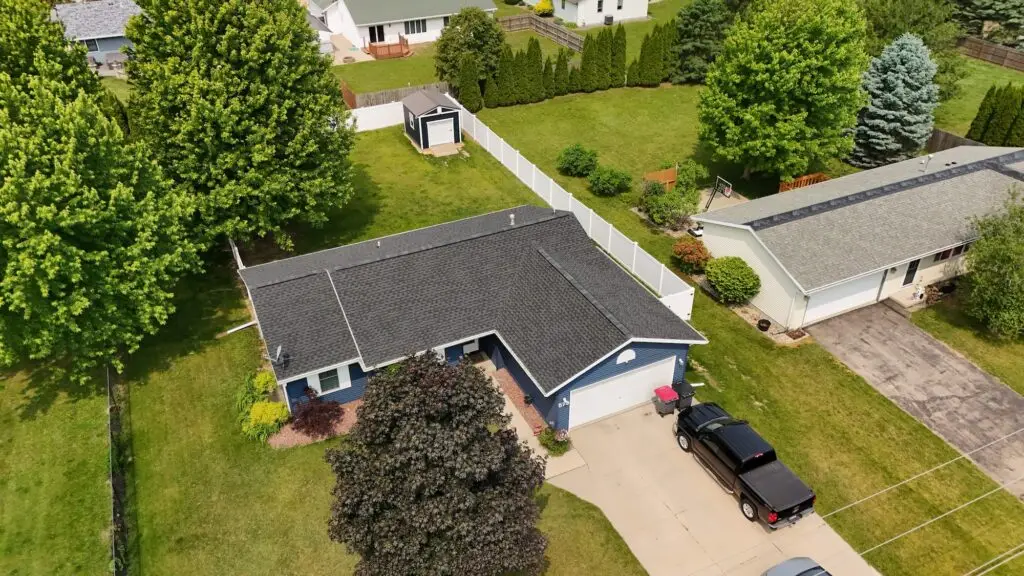
Being home is better but not always required, and for most roofing and siding estimates nobody needs to come inside at all. The only reasons we'd ask to come in are an active leak, a ceiling or wall stain, or ice dam history, because the attic and the inside of the wall tell you things the exterior can't. If you can't be there, leave the gate unlocked and we can walk the exterior and send photos and the written scope by email.
Get My Free Estimate →- The 15-minute prep list
- How soon can someone come out, and when do you get the estimate?
- What actually happens during the visit
- What it's likely to cost
- Deposits, payment schedule, and how long the price stays good
- Questions you should have answers to before the estimator leaves
- If storm damage is part of the picture
- Red flags to notice during the visit itself
- Ready to get a real look at it?
- FAQs
You booked a free estimate. Now you're wondering what actually happens when somebody pulls into your driveway, how long it takes, and whether you're about to get a hard sell at your kitchen table.
Short answer: a normal roofing or siding estimate visit is a walk-around of the house, some measuring, a look at any known problem areas, and a conversation about what you want and what you can spend. For a typical home in Madison, Janesville, Stoughton or Monroe, that's usually 20 to 45 minutes. Longer if there's storm damage to document.
You don't have to prepare much. But fifteen minutes of prep makes the visit twice as useful, and it's the difference between getting a number and actually understanding your options.
The 15-minute prep list
Clear access to what needs looking at. Move vehicles out of the driveway so there's room for a ladder and a truck. Unlock the gate if the backyard is fenced, and put the dog inside. Point out anything blocking ladder setup along the eaves.
Clear a path to the attic hatch if you've had leaking or ice problems. The attic is where the truth lives: stained plywood, rusted nail tips, compressed insulation, blocked soffit vents. It matters because ice damming, the winter failure we get called out for most around here, doesn't start with your shingles. It starts with warm air leaking into a cold attic, melting snow that refreezes at the eave and backs water uphill under the first few courses. Ice-and-water shield at the eaves protects against the damage. Ventilation and insulation address the cause.
Pull together the paperwork you already have. Past repair invoices or the date of the last reroof. Your homeowners insurance declarations page if hail or wind is involved, so you know your deductible and whether your policy pays replacement cost value (RCV, which pays full replacement less your deductible) or actual cash value (ACV, which deducts depreciation first). That distinction changes the whole math. Have your claim number handy if you've already filed.
Know which version of this visit you want. There are really three: you want a number and a timeline, you want a second opinion on damage someone else claims to have found, or you're deciding between materials and need help weighing cost against lifespan. Say which in the first two minutes.
Write your questions down. This is the step people skip and regret. Once somebody's standing in your living room talking about ridge vent and drip edge, you'll forget the question you chewed on all week.
List what you've actually noticed. Ceiling stain after the last hard rain. Granules in the gutter. A siding panel that let go in a March windstorm. You know your house better than anyone who's been looking at it for twenty minutes.
Do you need to be home? Does anyone come inside?
Being home helps, but it isn't always required, and for most estimates nobody needs to come inside your house at all. Roof and wall measurements come from the outside.
Someone should look inside in three situations: an active leak, a ceiling or wall stain, or a history of ice dams. Then the attic and the affected room matter, because that's where you see whether water has reached the decking or the framing.
If you can't be there, leave the gate unlocked and say so when you book. We'll walk the exterior, photograph what we find, and send the photos and written scope by email.
How soon can someone come out, and when do you get the estimate?
In a normal week, most homeowners can get an estimate visit scheduled within a few days. After a hail or wind event moves through Dane, Rock or Green County, the entire local market backs up for weeks, so calling early matters more than it feels like it should.
For a straightforward roof or siding scope, expect the written estimate within a day or two of the visit, not three weeks later. Insurance claim work takes longer because the scope has to be built to match the adjuster's paperwork.
Ask for both timelines when you book, and if an active leak is involved, say that on the phone. Tarping and emergency work get triaged differently from a planned replacement.
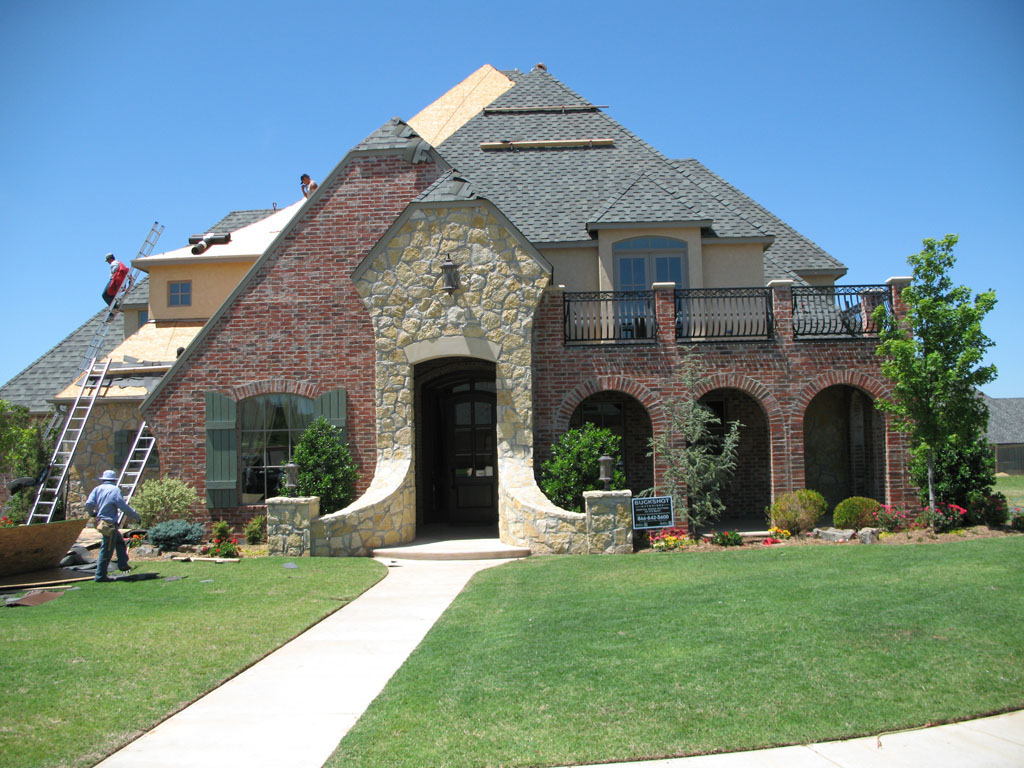
What actually happens during the visit
The exterior walk-around
It starts outside. We walk the full perimeter and read the roof planes from the ground first: shingle condition, granule loss, creased or lifted tabs, flashing at chimneys and sidewalls, pipe boot rubber (that cracks and leaks years before shingles fail), valleys, gutters and fascia.
On siding, every elevation gets looked at separately. South and west walls take the UV beating here. North walls hold moisture and grow algae. We check for chalking, brittle or cracked vinyl, buckled panels, soft trim, and failed caulk at windows and doors. Buckling usually means the panels were nailed too tight originally, which changes how the fix gets scoped.
How the roof gets measured
Measurements come from an on-site walk plus aerial or satellite measurement reports. Those reports are accurate enough to price from, but pitch, penetration counts and layer count still get verified on site, because that's where the cost actually hides.
That's why an estimator doesn't always climb up for a basic estimate. Measuring a roof and inspecting one are two different jobs. If you suspect hail or wind damage, or there's an active leak, someone should get on the roof or at least to the eave on a ladder. Hail bruising feels like a soft dent under your thumb and never shows up in an aerial photo.
How siding gets measured, and the decisions behind the number
Siding is priced by elevation, not by your home's floor area. Each wall gets measured length by height, gables added in, and the total converted to squares of 100 square feet. Two homes with identical floor plans price differently because one has more gable area and dormers.
Then come the scope decisions that move the price:
- Tear off the old siding or side over it. Going over existing siding is cheaper and sometimes fine, but it hides rot and can't be done over multiple layers.
- House wrap and insulation. New weather-resistive barrier, fanfold or rigid foam underneath, and whether you want insulated panels at all.
- Trim scope. Corner posts, J-channel, window and door wrap, and whether soffit and fascia are included or left as-is. A quote that excludes soffit and fascia will always look cheaper than one that includes them.
Matching or repairing just the damaged panels
Ask about this before you price a whole house. If a windstorm took out three panels, a repair may be possible, but older vinyl profiles and colors get discontinued, and existing siding fades, so even a correct color code can read wrong next to 15-year-old panels.
The usual workarounds: pull matching panels from a hidden elevation (behind a garage, under a deck) and use them on the visible wall, or redo one full elevation so any color difference lands on a corner instead of the middle of a wall. We'll tell you honestly whether a patch is going to look like a patch.
Windows and trim don't have to be replaced with the siding. But siding is the cheapest time to do it, because the panels are already off and the window wrap is already being handled. Doing it later means cutting back into finished siding. If the windows are sound, we wrap and flash them. If they're shot, we price both and let you decide. The siding material and trim options page walks through what each system involves.
The goals and budget conversation
Before numbers, a decent estimator asks how long you plan to stay, whether you're solving a leak or chasing curb appeal, and roughly what you had in mind to spend. That's not a trick to price you high. It's how we know whether to walk you through a standard architectural shingle, a premium line, impact-resistant Class 4 shingles (which may earn a premium credit depending on your carrier, so ask your agent before you pay the upcharge), or a standing seam metal roof that outlives all of them.
What it's likely to cost
Ranges only, and these are market ranges as of this writing. Shingle and panel pricing moves, sometimes mid-season, so nothing below is a quote.
One thing that trips people up: roof size is footprint plus pitch factor plus overhangs, not your living area. A 1,400 square foot ranch has noticeably more roof than a 1,400 square foot two-story, because the two-story's footprint is roughly half as large.
- Architectural asphalt tear-off, straightforward ranch: commonly $9,000-$16,000.
- Steeper pitch, two-story access, multiple dormers, skylights or decking replacement: often $16,000-$30,000.
- Premium or designer shingles: typically adds roughly 15-30% over standard architectural.
- Standing seam metal: frequently two to three times an asphalt reroof, with a much longer service life.
- Vinyl siding, average home: commonly $12,000-$25,000. Insulated vinyl runs above that, and fiber cement or steel is usually well higher again.
Two things reliably blow up a roof estimate once work starts: rotten decking nobody can see until tear-off, and a second or third layer of old shingles. Ask how both are priced before you sign, so a surprise shows up as a line item instead of a renegotiation.
If the number is more than you can spend
Say so. It's not awkward, and it's the most useful sentence in the whole visit.
Most exterior work can be phased. Handle the elevation that's leaking or the failed flashing now, replace the rest next season. A stopgap repair on a roof with a few years left in it is often the right answer. Financing is worth asking about too.
The one thing not to do is let an active leak sit. Water moves from shingles into decking, then into rafters and insulation, and the $600 flashing repair turns into partial deck replacement.
Repair or replace?
Plenty of calls end in a repair, and you should expect an honest answer. A pattern we run into constantly in older Dane County neighborhoods: a homeowner calls about a bedroom ceiling stain, and the shingles still have years left. The leak traces to a cracked pipe boot or failed step flashing a few feet uphill, sometimes combined with ice damming at the eave. That's a repair, not a reroof. Our residential roofing work covers both ends of that.
Replacement is the honest answer when shingles are brittle and granule-bare across every slope, there are leaks in multiple areas, or decking is soft. Ask directly: "What would you do if this were your house, and what does the repair option look like?" If the answer is always full replacement no matter what's up there, that tells you something.
Not sure if what you're seeing is urgent or cosmetic? That's exactly what a free inspection is for. Call (608) 909-9109 and we'll take a real look, send you photos of what we find, and leave you with a written number.
Free on-site inspection · Family-owned since 1979Deposits, payment schedule, and how long the price stays good
Nobody should be asking you for a big check at the estimate. Reasonable looks like this: no money changes hands at the visit, a modest deposit when materials are actually ordered, progress payments on larger jobs, and the balance at completion. Ask for that schedule in writing alongside the scope.
Get the estimate's validity window in writing too. Around 30 days is normal, often with a note that pricing is subject to material cost changes. That's honest. "Price good today only" is not.
Want a straight answer on your roof?
We'll inspect it, document everything, and tell you honestly what you're looking at, even if the answer is patch it for now. No pressure.
Questions you should have answers to before the estimator leaves
The full scope, in writing. Tear-off of how many layers, decking replacement and how it's priced if rot appears, ice-and-water shield footage at eaves and valleys, new pipe boots and flashing versus reuse, ridge vent, disposal, permit.
The dollar difference between material options. Not "we can do better shingles." Actual numbers, so you can choose.
Both warranties. Manufacturer coverage on the material and the contractor's workmanship warranty on the labor are separate things. Early leaks almost always trace back to flashing and detail work rather than the shingle itself, which is why the workmanship term matters.
Proof of licensing. In Wisconsin, pulling a building permit on a one- or two-family home requires a Dwelling Contractor certification for the business and a Dwelling Contractor Qualifier credential held by an individual, issued through the state. Confirm the contractor pulls the permit. One asking you to pull your own is a warning sign.
Proof of insurance, sent by the carrier. Ask for a certificate of general liability and workers' compensation emailed to you directly from their insurance agent, not a photocopy handed over at the table. If a worker gets hurt on an uninsured crew, that can land on your homeowners policy.
Property protection and cleanup. How landscaping and the AC unit get covered, where the dump trailer sits, how the driveway is protected, and how nails are handled. The answer should include magnet sweeps, more than once.
A realistic timeline, and who your point of contact is while the work is happening. Spring and post-storm backlogs here are real.
Once the paper is in your hands, read it closely. We wrote a separate breakdown on how to read a roofing estimate line by line, because two quotes that look $4,000 apart are sometimes just organized differently, and sometimes one of them quietly left out the tear-off.
If storm damage is part of the picture
An approved claim is not a free roof. Your deductible is your responsibility, and any contractor offering to "eat" or "cover" it is offering to commit insurance fraud. That's a walk-away, every time.
On an RCV policy, the carrier typically pays actual cash value first and releases the remaining depreciation after the work is completed and documented. ACV policies pay depreciated value, period, which means more out of pocket.
Ask whether the contractor will meet your adjuster on site. We do, because damage gets missed when nobody from your side is on the roof during the inspection, and that documentation is central to our hail and wind damage restoration work.
Red flags to notice during the visit itself
Same-day-signature pressure. Material costs move. They don't move by 5 p.m.
- Refusing to put the scope in writing. Nonstarter.
- No certificate of insurance, or excuses about getting one.
- An estimator who can't explain why a material or approach is being recommended, in plain English.
- Discouraging other estimates. Confident contractors expect you to shop.
- Pushing a claim on damage they haven't shown you. Ask to see the hail hits and the photos.
- Storm-chaser signals. Out-of-state plates, no local address, knocking doors three days after a hailstorm and gone by August. When something leaks in year four, there's nobody to call.
Two or three estimates is normal and smart. Just compare identical scope on each, or you're comparing nothing.
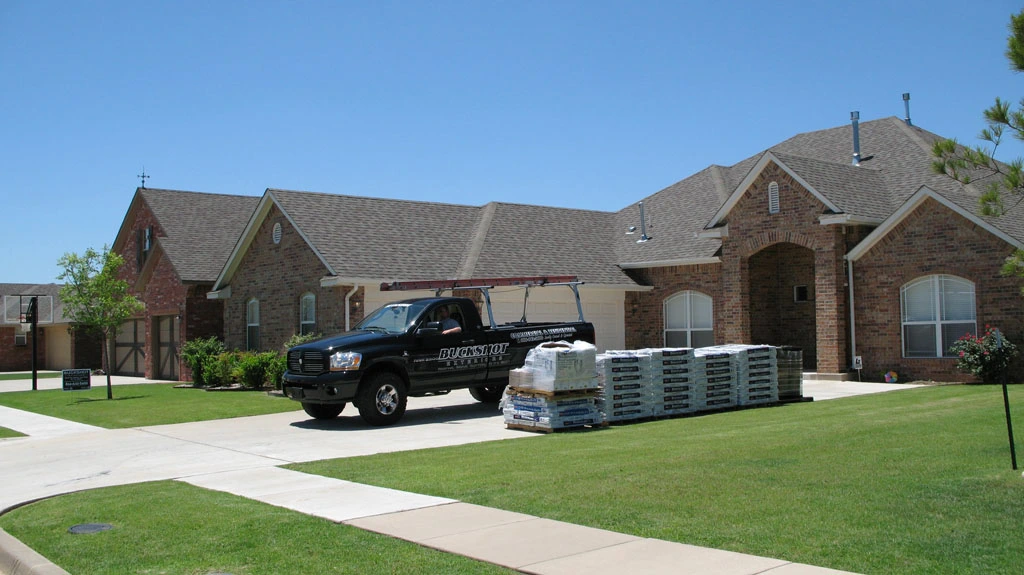
Ready to get a real look at it?
The on-site inspection and written estimate are free, with no obligation. You get photos of what we found, a straight answer on whether it's a repair or a replacement, and the scope and payment schedule in writing so you can sit with it, compare it, or sleep on it. If you say no, that's the end of it.
Buckshot has been family-owned and working on homes in Dane, Rock and Green counties since 1979, and we handle the whole exterior: roofing, siding, gutters, windows and doors, plus storm restoration with 24-hour emergency response when a tarp can't wait until Monday.
Call (608) 909-9109 or request your free inspection here. Bring your list of questions. Getting up on the roof is our problem, not yours.
Get a straight answer on your Madison roof
Wisconsin storm season and insurance non-renewal letters do not wait. Get a free, no-obligation inspection and an honest assessment of exactly what your roof needs, even if the answer is to wait.