It depends on your governing documents. Most HOAs in Wisconsin that cover attached or clustered homes (condos, townhomes) treat roofs as common elements, meaning the association owns the responsibility and cost. Single-family HOAs sometimes put roofs on individual owners. Always check your CC&Rs and Declaration before assuming either way.
Get My Free Estimate →- Why HOA Roofing Is a Different Animal Than a Single-Family Job
- The Real Cost of Waiting
- How to Structure a Community-Wide Replacement Project
- Insurance Claims on HOA Properties
- What Tenant and Owner Disruption Actually Looks Like - and How to Minimize It
- The Warranty Question: What HOAs Should Actually Ask For
- Working With a Contractor Who Understands Commercial and HOA Work
- Ready to Get a Handle on Your HOA's Roofing Needs?
- FAQs
If you manage or sit on the board of a homeowners association in Dane, Rock, or Green County, you already know that roofing is never simple. It's not one house - it's ten, twenty, sometimes forty buildings that all need to be maintained, budgeted for, and eventually replaced. And every one of those roofs is someone's home.
Getting an HOA roof replacement right protects property values, keeps your reserve fund intact, and avoids the kind of special assessments that turn neighbor against neighbor at the annual meeting. Getting it wrong is expensive in ways that echo for years.
Here's what we've learned after more than four decades of working with property managers, condo associations, and HOA boards across south-central Wisconsin.
Why HOA Roofing Is a Different Animal Than a Single-Family Job
On a standard residential job, one homeowner makes the decisions. On an HOA project, you might have a five-person board, a property management company, an insurance carrier, and 80 unit owners - all with opinions.
The contractor who's great at one-off residential work isn't always equipped for this. Coordination, communication, and documentation become just as important as the actual roofing.
A few realities specific to HOA work:
- Scope is larger. Even a modest community might have 15-20 roofs. Material orders, crew scheduling, and waste disposal all scale up accordingly.
- Governing documents control responsibility. Before you spend a dollar, confirm whether roofs are common elements (association responsibility) or limited common elements (sometimes shared or owner-maintained). Your CC&Rs are the starting point.
- Wisconsin weather compresses your season. Late April through October is your realistic window for most roofing work in this part of the state. That means a large community replacement needs to be planned well in advance - not started after the first bad inspection in August.
The Real Cost of Waiting
Boards sometimes delay roof replacements to avoid tough financial conversations. It's understandable. But deferred maintenance on roofing compounds fast.
A shingle roof that's past its service life starts failing at the underlayment, then the decking. What might have been a straightforward tear-off and replacement becomes a partial decking replacement on building after building. That adds cost - and time.
In south-central Wisconsin, we also deal with ice damming, freeze-thaw cycles, and hailstorms that can move through Dane County two or three times in a single spring. An aging roof that might have survived another year in a milder climate often doesn't make it through a Wisconsin winter intact.
The lifecycle math is simple: replacing a roof at year 22 on a planned schedule almost always costs less than replacing it at year 26 after two years of interior water damage claims.
How to Structure a Community-Wide Replacement Project
Start with a Condition Assessment
Before anything else, get a professional inspection of every roof in the community. Not a quick walk-around - a documented, per-building assessment with photos and notes on remaining life, current damage, and priority ranking.
This gives your board something concrete to work from. It also becomes part of your reserve study documentation, which Wisconsin condo associations operating under Wis. Stat. § 703 should be maintaining anyway.
Phase the Work if the Budget Requires It
You don't have to do everything at once. A phased replacement plan - tackling the worst buildings first, then working through the rest over three to five years - lets you spread reserve fund draws and avoid a single-year budget crisis.
The key is locking in pricing with your contractor upfront. Material costs fluctuate, and a multi-year agreement with a fixed unit price protects you from inflation surprises.
Choose Materials That Make Sense for Wisconsin
For residential-style HOA buildings (townhomes, cluster homes, low-slope condos), here's what actually performs well in this climate:
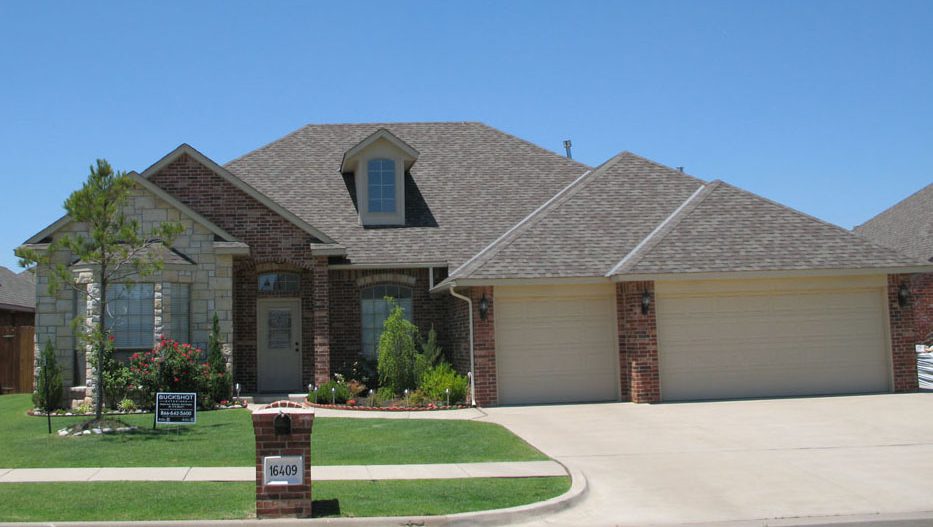
- Architectural shingles - the baseline. Heavier than 3-tab, better wind resistance, longer manufacturer warranty.
- Class 3 or Class 4 impact-resistant shingles - worth the upcharge in hail country. Some carriers in Wisconsin will reduce your HOA master policy premium for upgrading to Class 4. Ask your insurance agent before you spec the job.
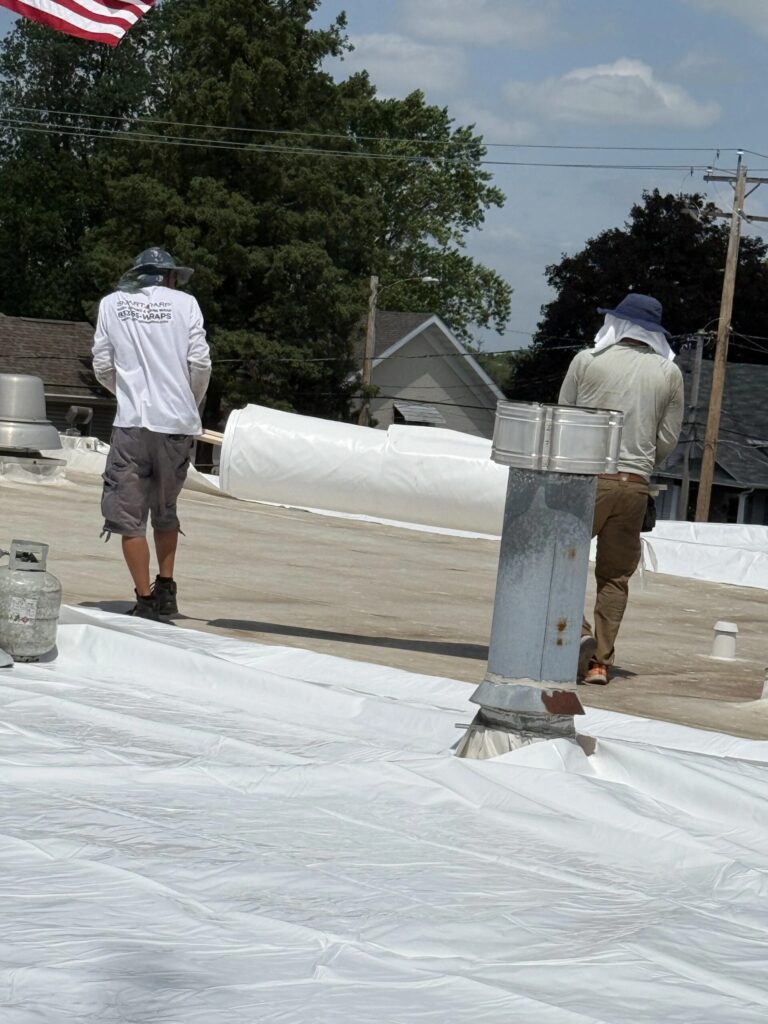
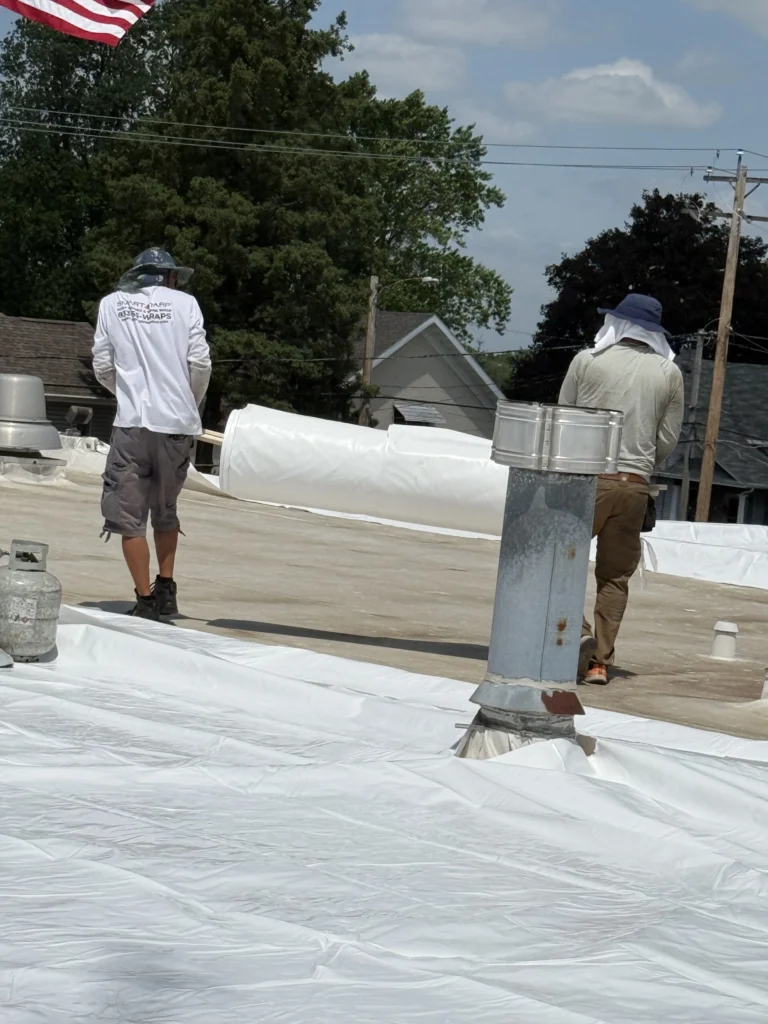
- TPO or modified bitumen - for flat or low-slope roofs on condo buildings. TPO has become the standard for good reason: heat-welded seams, solid UV resistance, and straightforward maintenance.
Don't let a contractor spec the cheapest shingle available just to win the bid. On an HOA project, you're buying a 25-30 year relationship with that roof. The material choice matters.
Insurance Claims on HOA Properties
South-central Wisconsin gets hit. Hailstorms, straight-line wind events, and the occasional microburst can damage dozens of buildings in a single afternoon.
The good news: most HOA master policies cover all association-owned structures under one policy. That means one claim, one adjuster, one settlement - if it's handled correctly.
The mistake boards make is filing the claim and then waiting for the adjuster to show up alone. Adjusters are thorough, but they're also working through a stack of claims after every major storm. Details get missed.
We meet your insurance adjuster on-site to document all hail and wind damage across every building. Every damaged surface gets noted. That documentation is what drives a full, fair settlement - not a partial one that leaves your association funding the gap out of reserves.
If your community took a hit this past storm season, don't assume you missed your window. Storm damage claims have specific timelines, and it's worth getting a professional inspection before you decide whether to file.
What Tenant and Owner Disruption Actually Looks Like - and How to Minimize It
This is the question property managers ask most. Nobody wants to deal with 40 angry emails about roofing noise at 7 a.m.
A few things that make a real difference:
- Communicate early and often. A letter or email to all residents before work begins - explaining the schedule, what to expect, and who to contact with concerns - prevents most complaints before they start.
- Work sequentially, not simultaneously. Doing one building at a time is louder for that building's residents for a day or two, but it's less disruptive overall than having crews scattered across the community for weeks.
- Protect landscaping and vehicles. Nail strikes and falling debris are the most common complaint on HOA jobs. Establish staging areas away from parked cars and communicate clearly about temporary parking restrictions.
- Clean up daily. Magnetic sweeps, debris removal, and end-of-day site cleanup aren't optional on a community project. Residents notice.
Want a straight answer on your roof?
We'll inspect it, document everything, and tell you honestly what you're looking at, even if the answer is patch it for now. No pressure.
The Warranty Question: What HOAs Should Actually Ask For
Manufacturer warranties on shingles are not all created equal. A standard limited warranty and a no-dollar-limit (NDL) warranty are very different things.
For an HOA project, push for the strongest manufacturer warranty your contractor can offer. That usually means working with a contractor who has a formal certification relationship with the manufacturer - not just anyone who buys the shingles.
Also ask specifically about the workmanship warranty. A manufacturer warranty covers materials. A separate workmanship warranty from your contractor covers installation defects. Both matter. Get both in writing before you sign anything.
For more on what a properly warranted roof replacement looks like in the Madison area, our residential and commercial roofing pages walk through what's included in a Buckshot Exteriors installation.
If you're managing an HOA or condo community in Dane, Rock, or Green County and you're not sure where your roofs stand - or you need to start planning a replacement - reach out for a no-cost commercial assessment. We'll inspect your buildings, give you a clear picture of what you're working with, and help you build a replacement plan that fits your timeline and budget. No pressure, no obligation.
Working With a Contractor Who Understands Commercial and HOA Work
There's a meaningful difference between a contractor who does residential work and one who is genuinely set up for commercial and multi-family projects. HOA boards deserve the latter.
At Buckshot Exteriors, we've been doing this work in south-central Wisconsin since 1979. We understand reserve fund constraints, insurance adjuster coordination, phased project planning, and the communication that keeps a community running smoothly during a major exterior project.
We're not the cheapest option on every bid. We're the option that shows up with a real plan, puts everything in writing, and is still around when you have a warranty question five years from now. You can read what other property owners and managers have said on our reviews page.
Ready to Get a Handle on Your HOA's Roofing Needs?
Whether you're facing an emergency replacement, planning ahead for the next budget cycle, or just trying to understand what shape your roofs are actually in, the first step is a professional assessment.
Call Buckshot Exteriors or reach out through our website to schedule a free commercial inspection and estimate. We'll walk your property, document what we find, and give you a straight answer - no sales pressure, no runaround. Just honest information from a contractor who's been doing this work in Wisconsin for over 47 years.
Your community's roofs are a major asset. Treat them like one.
Get a straight answer on your Madison roof
Wisconsin storm season and insurance non-renewal letters do not wait. Get a free, no-obligation inspection and an honest assessment of exactly what your roof needs, even if the answer is to wait.