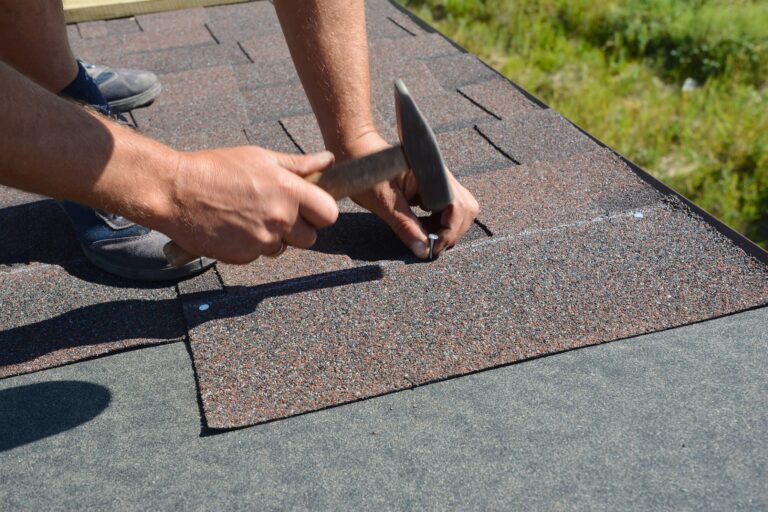
No. Many homeowners carriers writing policies in Wisconsin offer an impact-resistant roof credit, but it is not universal and the size varies a lot by company. Wisconsin does not require insurers to offer an impact-resistant credit, so it is entirely a carrier decision. Call your own agent, ask whether they have a Class 4 or impact-resistant discount, and ask what documentation they need before you sign a roofing contract.
Get My Free Estimate →- What "Class 4" actually means
- Do Wisconsin insurers really give a Class 4 discount?
- What Class 4 shingles cost in south-central Wisconsin, and the math to run
- "I'll just let insurance buy me a new roof when hail hits"
- If the adjuster denies or underpays your hail claim
- How to vet a roofer after a Wisconsin hail storm
- Which Class 4 shingles we install, plus color and timeline
- Installation decides whether you actually get the performance
- Class 4 and FORTIFIED roofing in Wisconsin
- When Class 4 is the wrong call
- Get both numbers before you decide
- FAQs
Short answer: sometimes, yes. Many homeowners carriers writing policies in Wisconsin offer a premium credit for Class 4 impact-resistant shingles, but the discount is not universal, it is not automatic, and the size of it varies a lot from company to company.
So anyone who tells you "Class 4 shingles save you 20% on your insurance" is guessing. The only person who can tell you your number is your own agent.
Here is the honest version of this conversation, including the part where Class 4 is the wrong call for your house.
What "Class 4" actually means
Class 4 is the highest rating in the UL 2218 impact-resistance test. A steel ball is dropped from a set height onto a shingle sample, twice in the same spot. To earn Class 4, the sample has to take a 2-inch steel ball without cracking or splitting, including on the hidden underside of the mat. A similar test, FM 4473, uses ice balls instead of steel.
Both are lab tests measuring one thing: does the shingle fracture when something hits it hard?
What that buys you on a real roof:
- Better resistance to cracking and puncturing when hail hits
- Fewer holes in the mat, which means fewer slow leaks into decking and insulation
- Usually a tougher, more flexible shingle (many Class 4 products use polymer or SBS-modified asphalt that stays pliable in a Wisconsin January)
- A documented rating your agent can actually enter in their system
What it does not buy you:
- It is not hail proof. Nothing is.
- Granule loss still happens, and granule loss shortens roof life by exposing asphalt to UV.
- Mat bruising and cosmetic dents still happen, especially on vents, gutters, fascia and other soft metals.
- Big hail still wins. Once you are into golf-ball and larger stones with wind behind them, any asphalt shingle on the market can be damaged. Our guide on what size hail damages a roof walks through the thresholds we actually see here.
Class 4 shifts the odds. It does not repeal the weather.
What the difference looks like at tear-off
On standard architectural shingles, serious hail leaves punctures and fractured mat, and once you find that on multiple slopes you are past repair. On Class 4 shingles hit by comparable stones, the pattern we typically see is heavy granule loss and bruises you can feel with your thumb, with the mat underneath still intact.
That is the honest picture: Class 4 does not make the hail disappear, it changes whether the hail got through. Ask us on your inspection and we will show you the difference off the roof, side by side.
Do Wisconsin insurers really give a Class 4 discount?
Many do. Some do not. And a few offer a credit so small it barely justifies the paperwork.
Two Wisconsin realities worth knowing. First, Wisconsin does not require carriers to offer an impact-resistant roof credit. Texas and some other hail-belt states have statutory or regulator-driven discount requirements; Wisconsin does not, so here it is entirely a carrier decision. Second, when a credit does exist, it usually applies to a portion of your dwelling premium, not your whole bill. Homeowners who hear "10%" and apply it to their total annual premium are often disappointed when the credit shows up.
Exactly what to ask your agent
Call before you sign a roofing contract, not after.
- "Do you offer an impact-resistant or Class 4 roof discount in Wisconsin, and what is the percentage?"
- "Does it apply to my whole premium or only the dwelling portion?"
- "What documentation do you need?" (Usually the manufacturer spec sheet showing UL 2218 Class 4 for the exact product, plus the contract or final invoice.)
- "Do you need photos or a re-inspection, now or at renewal? Does the credit shrink as the roof ages?"
- "Does my policy have a separate wind and hail deductible, an age-based roof payment schedule, or a cosmetic damage exclusion, and would a Class 4 roof change any of those?"
Write the answers down and keep the paperwork in one folder. If you change carriers later, you will have to prove the Class 4 roof from scratch. We cover the wider picture in does a new roof lower your home insurance in Wisconsin.
What Class 4 shingles cost in south-central Wisconsin, and the math to run
Based on the estimates we are writing in Dane, Rock and Green counties right now, the installed premium for a Class 4 roof over a standard architectural shingle roof generally runs about 10-25%, depending on manufacturer, color and roof complexity. Treat that as a range that moves with material pricing, never a quote.
Run four lines, not one.
1. The upfront gap. Get both numbers on the same estimate: standard architectural shingles versus the Class 4 product, same crew, same underlayment, same scope. Any honest contractor will price it both ways.
2. The discount over time. Annual credit times the years you plan to stay.
3. Claims avoided. Usually the biggest line, and the one people skip.
4. Depreciation and hassle. If your policy pays actual cash value (ACV) on the roof, you eat the depreciation. Replacement cost value (RCV) pays the full cost once the work is done. A roof that survives the storm keeps you out of that conversation entirely.
Here is a worked example with round numbers. Say the upgrade gap on your house is $2,500 and your carrier's credit is worth $120 a year. On the discount alone that is roughly 20 years to break even, which is exactly why some homeowners walk away. Fair enough.
Now add line 3. If your policy carries a 1% or 2% wind and hail deductible on a $400,000 dwelling, a single hail claim costs you $4,000-$8,000 out of pocket before insurance pays a dime. Avoiding one claim pays for the upgrade several times over. That is the real argument, not the discount.
Will insurance pay toward the upgrade itself?
Almost never. Carriers pay to replace what you had with like kind and quality, so a claim on standard shingles funds standard shingles. Ordinance or law coverage pays for upgrades required by code, and Class 4 is not required by Wisconsin code, so it usually does not apply either.
That is why timing matters: the cheapest moment to go Class 4 is when a full replacement is already approved, because the claim covers the replacement and you pay only the difference.
Not sure whether your roof has claimable hail damage, or whether Class 4 pencils out for your house? We do free, no-pressure on-site inspections across Dane, Rock and Green counties. Call (608) 909-9109. We will look, tell you straight what we see, and leave you the photos either way. Financing options are available if the upgrade gap is the sticking point, and we will lay out both prices before you decide anything.
"I'll just let insurance buy me a new roof when hail hits"
That is the most common position we hear, and it gets riskier every year in Wisconsin. Percentage wind and hail deductibles, age-based roof payment schedules that pay depreciated value on older shingles, and cosmetic damage exclusions that let a carrier decline dented-but-not-leaking shingles are all showing up more often here. The plan of "hail will pay for my next roof" quietly becomes "hail pays for part of my next roof, and I write a five-figure check."
Frequency matters too. One hail claim from a storm that hit an entire neighborhood is normally treated differently than a pattern. Two or three roof claims in a few years can lead to a non-renewal, a higher deductible, or being moved onto an age-based roof schedule at renewal.
So the case for Class 4 is less about the premium credit and more about staying off the claim treadmill in a part of the state that sees hail most spring and summer seasons.
If the adjuster denies or underpays your hail claim
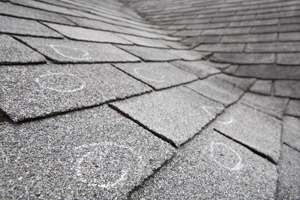
You have options, and you should use them in order. First, request a re-inspection and have your roofer on the roof with the adjuster, with damage chalked and photographed, test squares marked, and soft metals documented. A lot of "no damage" findings get reversed right there.
If you agree that damage is covered but disagree on the amount of loss, many Wisconsin homeowners policies contain an appraisal provision: either side can demand appraisal, each picks an appraiser, and the two select an umpire whose decision sets the loss amount. Read your policy conditions to confirm yours has it.
If the dispute is about coverage itself, or about how the claim was handled, you can file a complaint with the Wisconsin Office of the Commissioner of Insurance (OCI), the state agency that regulates carriers here. Also note that most policies require prompt notice of a loss and include a suit-limitation clause, commonly in the one to three year range. That clause lives in your policy conditions; your declarations page shows your deductibles.
How to vet a roofer after a Wisconsin hail storm
After a big hail event, out-of-state crews follow the storm into Dane and Rock counties, knock doors for two weeks, and are gone before the first ice dam forms. If the warranty is only as good as the company behind it, a truck with out-of-state plates and a phone number but no local address is a real risk.
And if anyone offers to cover, eat, or "work around" your deductible, walk away. That is asking you to participate in insurance fraud, and it usually means the claim is being padded to make up the difference.
Before you sign anything, ask for:
- A Wisconsin business address you could drive to, plus the DSPS dwelling contractor credential
- Certificates of general liability and workers' compensation, sent directly from their insurer
- A written scope with the exact shingle product, UL 2218 rating, nail count, underlayment and ice-and-water shield locations
- Manufacturer certification, like our GAF Master Elite status, which carries install and documentation standards behind it
- Real local reviews you can read on Google, Birdeye, Angi and HomeAdvisor
Want a straight answer on your roof?
We'll inspect it, document everything, and tell you honestly what you're looking at, even if the answer is patch it for now. No pressure.
Which Class 4 shingles we install, plus color and timeline
The impact-resistant asphalt lines we work with most often include GAF Timberline AS II, CertainTeed NorthGate ClimateFlex, IKO Nordic and Malarkey products such as Vista AR and Legacy. Several use SBS-modified asphalt, which is why they stay flexible in cold weather instead of turning brittle. Manufacturers do revise their lineups, so always confirm the UL 2218 Class 4 rating on the current spec sheet for the exact product and color you order, and keep that sheet for your agent.
Color is the real catch. Class 4 lines usually come in fewer colors than the standard line from the same manufacturer, and availability shifts by distributor and season. Popular colors can run days to a few weeks out, longer in peak storm season when everyone in the region is ordering at once. Check color early, especially if you are matching an HOA palette, a neighboring roof section or your siding. We bring physical samples so you are not choosing off a website swatch.
What the project actually looks like
Most single-family tear-offs here run one to three days on site, longer on steep, cut-up or multi-layer roofs. Expect noise, vibration, and a dumpster in the drive, so plan to move vehicles and take pictures off the walls. We tarp landscaping, magnet-sweep the yard and drive for nails before we leave, and we walk it with you.
The thing that stretches timelines is not the roof, it is the paperwork. If your adjuster's scope missed items, the supplement has to be submitted, reviewed and approved before that portion is funded, and that can add days or weeks depending on the carrier. We handle that back-and-forth for you, and we meet your adjuster on-site so fewer items get missed in the first place. That is the part of storm damage restoration in Dane County no homeowner should have to run alone.
Installation decides whether you actually get the performance
A Class 4 shingle installed wrong is a standard shingle with a better sticker. The rating comes from the lab sample; the performance comes from the crew.
- Nailing. Wrong nail count, high nails or overdriven nails void the wind rating and undercut impact performance. Many products require six nails in a specific zone, not four.
- Starter and edges. Factory starter strip at eaves and rakes keeps the first course from lifting. Cut three-tab used as starter is a shortcut we still find up there.
- Cold weather sealing. Shingles need warmth to seal. Installed at 40 degrees on a north slope in November, sealant strips may not bond until spring, which is why hand-sealing matters on late-season Wisconsin jobs.
- Deck and underlayment. Soft or delaminated decking, or skipped ice-and-water shield at eaves and valleys, will beat you on ice dams long before hail does.
Class 4 is not only asphalt
Standing seam and stone-coated steel metal roofing and some synthetic slate and shake products also carry Class 4 ratings, often with longer service life. Metal can still dent cosmetically from large hail even while staying watertight, so ask how your carrier treats cosmetic denting on metal before you buy.
Class 4 and FORTIFIED roofing in Wisconsin
Class 4 shingles are a recommended component of a FORTIFIED roof in hail-prone areas, not a required one. The mandatory items in the IBHS FORTIFIED Roof standard are the sealed roof deck, ring-shank nailing, enhanced edge metal and properly detailed flashing.
Two honest caveats. FORTIFIED insurance incentives are strongest in coastal states with mandated wind mitigation credits, and Wisconsin is not one of them. And independent FORTIFIED evaluator availability here is limited, so do not assume the designation is an easy box to check in Dane or Rock County. Even with no credit attached, the FORTIFIED method is simply better roofing for freeze-thaw, ice damming and straight-line wind.
Warranty ratings and impact ratings are separate things
A spec sheet lists four separate items: impact rating (UL 2218 Class 1 through 4), wind rating in mph (tied to specific nailing and starter requirements), algae resistance, and the limited warranty term including whether labor and tear-off are covered. A shingle can be Class 4 and still carry a lower wind rating than another product in the same line, and Class 4 implies nothing about algae coverage.
On hail specifically, most standard limited warranties exclude it as weather rather than a product defect. A few manufacturers offer a separate limited hail endorsement on their impact-resistant lines. If that matters to you, ask for it in writing. Either way, hail is primarily an insurance question, not a warranty question.
When Class 4 is the wrong call
Class 4 is usually worth pricing if you have already had a hail claim here, your carrier confirms a meaningful credit, you plan to stay long term, or your policy has a cosmetic exclusion or a percentage wind and hail deductible.
It is a closer call if you are selling in two years, your carrier offers no credit, and your roof has sheltered exposure. In that case a quality standard architectural shingle, installed right, is a perfectly good answer. We would rather tell you that than upsell you.

Get both numbers before you decide
We will get on your roof (or fly it when that is safer), check the slopes, vents, gutters and soft metals for bruising and wind creasing, and hand you photos plus two prices side by side: standard architectural and Class 4, same scope. If you have an open claim, we will meet your adjuster on-site and document the damage with you.
Family owned since 1979, GAF Master Elite certified, and you can read what your neighbors say about us on Google, Birdeye, Angi and HomeAdvisor. The inspection is free, there is no pressure, and it costs you nothing to find out. Call Buckshot Exteriors at (608) 909-9109 and we will tell you straight whether Class 4 pencils out on your residential roofing project, or whether it does not.
Get a straight answer on your Madison roof
Wisconsin storm season and insurance non-renewal letters do not wait. Get a free, no-obligation inspection and an honest assessment of exactly what your roof needs, even if the answer is to wait.