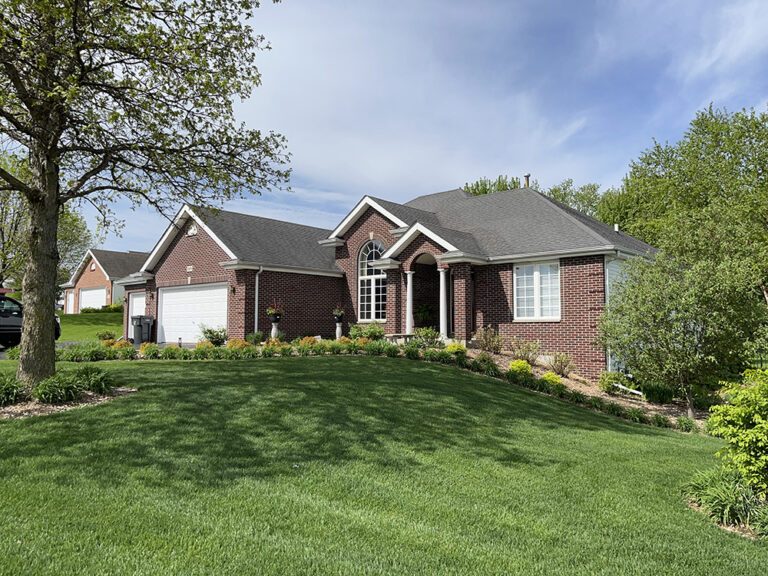
Expect Milwaukee to run above the Wisconsin average, driven by steeper pitches, multiple existing layers and the complexity of the older housing stock rather than by local labour rates. The honest answer for your address depends on measured roof area, pitch, layer count and decking condition. Anyone quoting a firm price from a satellite image is guessing at the two variables that matter most.
Get My Free Estimate →Milwaukee roofs cost more to replace than the Wisconsin average, and the reason is the housing stock rather than the market. A large share of the city was built before 1940, which means steep pitches, plank decking, complicated dormers and, very often, two or three layers of shingles already up there.
This guide covers what actually drives the number on your estimate, what the older stock changes, and how to tell a sound contractor from a storm-chasing one.
What moves the price on a Milwaukee roof
Six things account for most of the spread between quotes on the same house.
Roof area comes first, and it is not your floor area. A steep roof has far more surface than its footprint suggests, and pitch multiplies it.
Pitch itself is the second. Anything over about 8 in 12 needs staging, harnesses and slower work, and many Milwaukee bungalows and duplexes are steeper than that.
Layers are the third and the most commonly underestimated. Tearing off three layers costs materially more in labour and disposal than tearing off one, and a bid that assumes one layer will change once the crew is on the roof.
Complexity is the fourth. Dormers, valleys, chimneys, and the porch roofs common on the city's older homes each add flashing work, and flashing is where roofs leak.
Decking condition is the fifth, and it is the classic discovery cost. See the next section.
Material is the sixth and, for most homeowners, the smallest lever of the six.
Roof replacement cost by home size (Madison, 2026)
| Home | Roof size | Typical total |
|---|---|---|
| Small ranch / bungalow | 14-18 squares | $9,000-$13,000 |
| Average two-story | 18-26 squares | $12,000-$18,000 |
| Large or complex (steep) | 26+ squares | $17,000-$25,000+ |
Cost by roofing material (average Madison home, installed)
| Material | Lifespan | Typical total |
|---|---|---|
| Architectural asphalt (standard) | 25-30 yrs | $12,000-$18,000 |
| Impact-resistant (Class 4) | 30+ yrs | $15,000-$22,000 |
| Standing-seam metal | 40-50 yrs | $25,000-$45,000 |
Common add-on costs
| Item | Typical cost |
|---|---|
| Extra tear-off layer | $500-$1,500 |
| Decking replacement | $50-$80 per sheet |
| New flashing & pipe boots | $300-$700 |
| Seamless gutters | $1,000-$2,500 |
Typical Madison-area 2026 ranges. Your exact price depends on an on-site inspection. A new asphalt shingle roof recoups about 61% of its cost at resale on average (2024 Remodeling Cost vs. Value Report).
Quick roof replacement cost estimator
Get a ballpark in 20 seconds. For an exact figure, book a free on-site inspection.
Plank decking and the layer problem
Homes built before roughly 1950 usually have plank decking rather than plywood or OSB, meaning individual boards with gaps between them.
Plank decking is not a defect. Well-kept plank is perfectly sound and many Milwaukee roofs sit on it happily. But it changes two things.
Modern shingles need continuous support, so wide gaps between planks, or boards that have split around old nails, may require overlaying the deck with sheathing before the new roof goes on. That is a real line item and should be priced before work starts, not discovered.
Multiple layers compound it. Every previous re-roof drove another set of nails into the same boards. Strip three layers and you sometimes find planks that are more hole than wood.
Ask any bidder two questions. What is your price per sheet for replacing bad decking, and what happens if the planks need overlaying? A contractor who has worked the older neighbourhoods will answer both without hesitating. Call (608) 909-9109 and we will tell you what we expect to find on a house of your age.
Storm exposure
Southeastern Wisconsin takes damaging hail and straight-line wind most years, and Milwaukee's exposure differs across the metro.
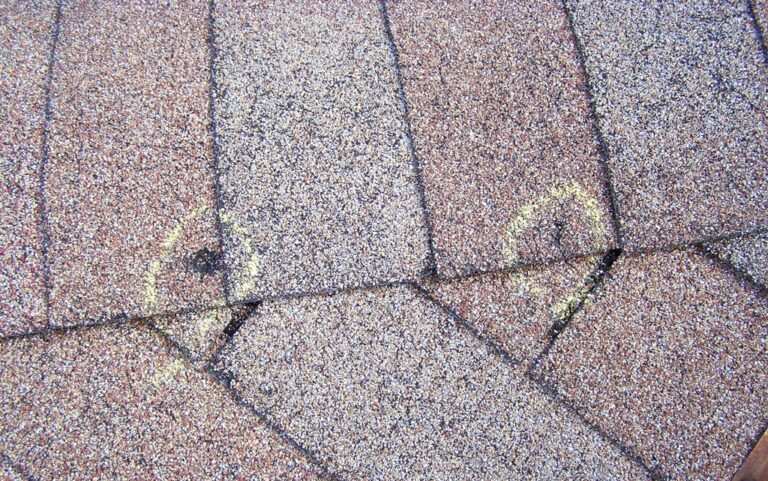
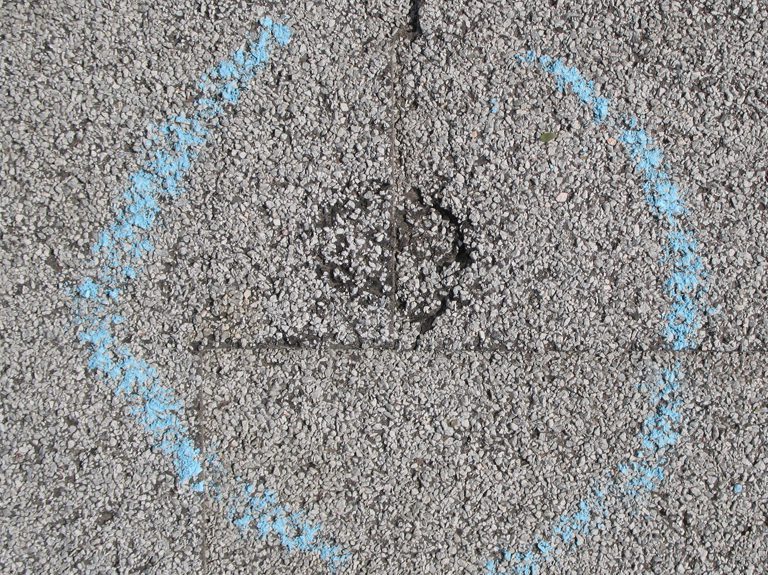
Hail damage on asphalt shows as soft dark bruises where granules have been knocked loose and the mat is fractured underneath. It is usually invisible from the ground, which is why it goes unclaimed.
Wind damage looks different. Shingles crease along a horizontal line, seals break, and tabs lift and lay back down, so a roof can look intact from the street and still be compromised.
Insurers treat the two differently, and a claim written for the wrong peril gets adjusted badly. Wisconsin carriers also apply filing deadlines from the date of loss, so an unclaimed storm from two seasons ago may no longer be claimable.
If a storm has passed over your neighbourhood, get the roof documented rather than waiting for a leak. See how we handle storm damage.
Permits and code
Milwaukee requires permitting for roof replacement, as most Wisconsin municipalities do, and requirements vary between the city and the surrounding suburbs.
Your contractor should pull the permit as part of the job and include the fee on the estimate rather than adding it later. Confirm which authority has jurisdiction at your address, because the rules in the city differ from those in Wauwatosa, Greenfield or Oak Creek.
The record matters twice. Insurers reviewing a later claim can ask what work was done and when, and buyers and title companies find unpermitted work during a sale.
Ask for the permit number in writing before the tear-off begins.
Want a straight answer on your roof?
We'll inspect it, document everything, and tell you honestly what you're looking at, even if the answer is patch it for now. No pressure.
Ice dams and ventilation
Ice damming is the winter failure mode on this housing stock, and it is not a roofing defect. It is a heat problem.
Warm air escaping into the attic melts snow on the upper roof. That water runs down to the cold eave, refreezes, and builds a dam that backs water up under the shingles.
Older Milwaukee homes are prone to it because of finished attics, knee walls, minimal insulation and blocked or absent soffit intake.
The durable fix is air sealing, insulation and balanced ventilation, not a bigger gutter or a heat cable. Ice and water membrane at the eaves is the defence built into a new roof, and it is what limits damage when a dam forms anyway.
Any bidder who tells you a new roof alone stops ice dams is overselling. Ask instead what they propose for intake ventilation at the soffits.
Vetting a contractor after a storm
Storm seasons bring crews into Milwaukee neighbourhoods from out of state, and some of them are fine while others are not.
Four checks separate them. Verify state licensing for work on one and two family homes, which you can look up yourself. Confirm liability insurance and workers' compensation with a certificate naming you. Ask for a local physical address, not a PO box. And ask which manufacturer certification they hold, because the strongest warranties are gated behind it.
Two offers should end the conversation immediately. Anyone proposing to waive or absorb your deductible is proposing insurance fraud in Wisconsin. Anyone pressing you to sign a document that assigns your insurance benefits to them is asking for control of your claim.
Our GAF Master Elite standing is the credential we are held to, and it requires licensing, insurance and a verified track record.
- A price dramatically lower than every other bid (corners are getting cut somewhere)
- Pressure to sign on the spot, or a "today only" discount
- A request to sign over your insurance claim (Assignment of Benefits)
- An offer to "waive your deductible" (that is insurance fraud, and it puts you at risk)
- No written, itemized estimate, or no proof of insurance
- A large upfront payment (more than 30%) before any work begins
Repair or replace
Repair makes sense when the roof is under roughly 15 years old, the failure is localised, and the rest of the field is in sound condition. Flashing repairs, a failed pipe boot, or a small wind-damaged section are all genuine repairs.
Replacement is the honest answer when granule loss is general across the roof, when there are multiple layers already, when leaks recur in different places, or when the decking underneath has gone.
The awkward middle case is a roof at 15 to 20 years with one failure. Repair it, and plan the replacement rather than being surprised by it. A written condition report with a remaining-life estimate turns that into a budget line instead of an emergency.
Get a straight answer on your Madison roof
Wisconsin storm season and insurance non-renewal letters do not wait. Get a free, no-obligation inspection and an honest assessment of exactly what your roof needs, even if the answer is to wait.