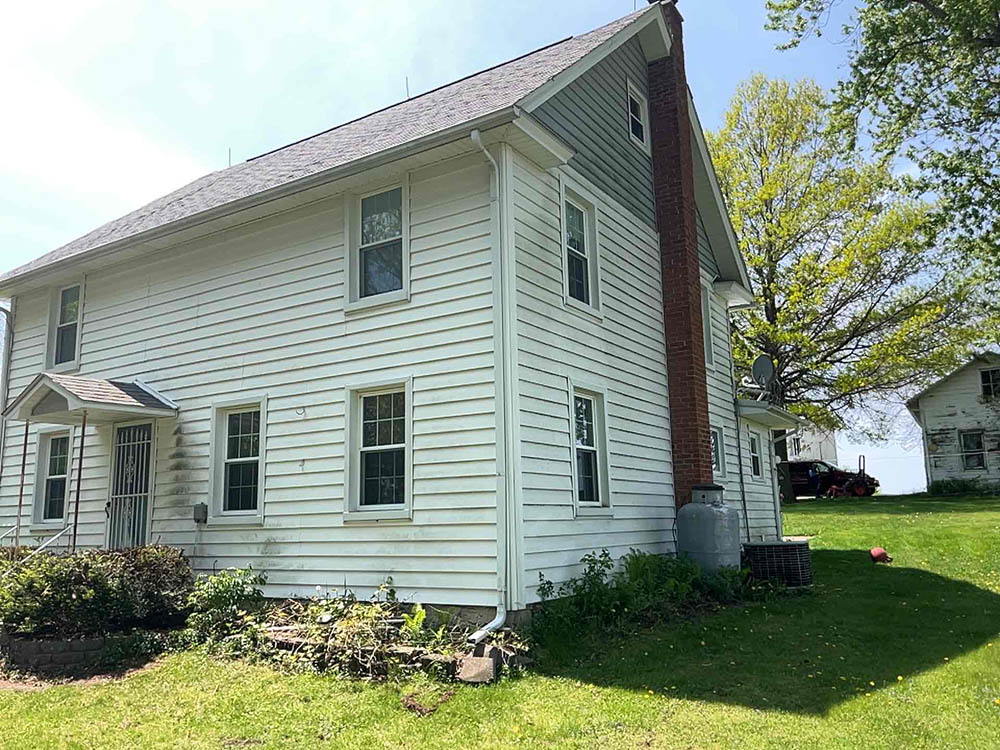
Installed, most Wisconsin vinyl siding jobs run about $6 to $13 per square foot of wall area, or roughly $600 to $1,300 per square (a square is 100 sq ft). Builder-grade vinyl on a simple ranch sits at the bottom of that range. Premium or insulated vinyl on a two-story with lots of corners, trim and soffit work sits at the top. Smaller homes usually price higher per foot, because setup, trim and disposal costs don't shrink with the house.
Get My Free Estimate →- Realistic vinyl siding cost ranges in south-central Wisconsin
- How vinyl siding is priced (and why bids look so different)
- What actually moves your siding replacement cost
- Repair or full replacement? A quick self-check
- Vinyl grades compared honestly
- Vinyl vs fiber cement, engineered wood and aluminum on cost
- Three real jobs, numbers rounded
- Who is actually on your house
- Woodpeckers, squirrels and bugs behind vinyl
- Color matching and replacing a panel years later
- How long vinyl siding lasts here, and what kills it
- Wisconsin winter installs, briefly
- Red flags in a suspiciously cheap siding bid
- Get real numbers for your house, free
- FAQs
Most whole-house vinyl siding jobs in Madison and the surrounding towns land between $9,000 and $33,000 installed. Per square foot of wall area, figure roughly $6 to $13 installed, or about $600 to $1,300 per square (a "square" is 100 square feet, the unit siding is actually sold in). Builder-grade vinyl on a plain ranch sits at the bottom of that range; premium insulated vinyl with full trim and soffit work sits at the top.
Your siding replacement cost has less to do with the color you pick than with your house: how tall it is, how many corners it has, whether the old siding comes off, and what we find underneath when it does. Here's how the number gets built, from a family company that has been writing these estimates in Madison, Watertown, Beloit and Janesville since 1979.
Realistic vinyl siding cost ranges in south-central Wisconsin
These are honest working ranges for our service area, not quotes. Nobody knows your number until your walls get measured.
| House type | Approx. wall area | Typical installed range |
|---|---|---|
| Small single-story ranch | 1,000-1,300 sq ft | $9,000-$14,000 |
| Average ranch or split-level | 1,300-1,800 sq ft | $12,000-$19,000 |
| Two-story colonial | 2,200-2,800 sq ft | $19,000-$33,000 |
| Large two-story with dormers, gables, porch | 2,800-3,500+ sq ft | $28,000 and up |
Wall area is not your home's square footage. A 1,600 sq ft ranch might have only 1,400 sq ft of wall. A 1,600 sq ft two-story has similar floor space but far more wall, plus ladder and staging work. That's why "how big is your house?" is the wrong first question.
How vinyl siding is priced (and why bids look so different)
Siding is priced by the square of wall area installed, plus linear footage for trim, soffit, fascia and accessories. A real estimate breaks out:
- Wall area, measured wall by wall, minus large openings
- Linear feet of corners, which take outside corner posts (the most labor-heavy detail on a house)
- Window and door openings, each needing J-channel, trim and careful flashing
- Soffit and fascia, usually aluminum or vented vinyl
- Tear-off and disposal
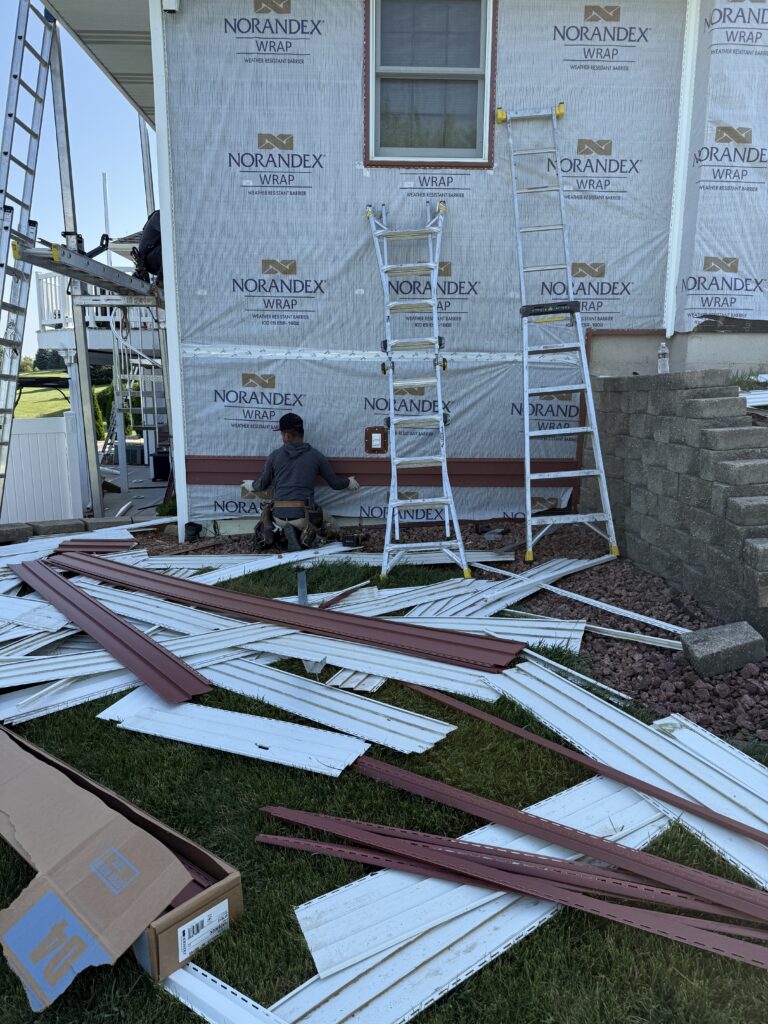
- Housewrap or weather-resistive barrier
- Sheathing or trim repair found underneath
- Permit fees
Two bids on the same house can differ by $8,000 because one includes tear-off, new housewrap and new soffit, and the other is builder-grade panels nailed over the old siding. Same address, completely different job. Compare line items, not bottom lines.
What actually moves your siding replacement cost
House size, stories and access
Second and third stories add staging, ladder time and safety setup. A hillside lot on Madison's near west side or a tight side yard on an older Janesville street can add hours per wall.
Tear-off of the old siding
Removing old siding typically adds $1,500-$3,500 on an average home, dumpster and disposal included. Layered cedar over original wood costs more. Worth it? Almost always. Tear-off is the only way to inspect sheathing, install a proper weather barrier and get flat walls. Siding over lumpy old siding telegraphs every wave.
Asbestos-cement siding on 1940s-50s homes
Plenty of postwar Madison, Beloit and Watertown homes wear asbestos-cement shingle siding. Two legitimate paths.
Leave it in place. Encapsulating it under furring strips, fanfold insulation and new vinyl is generally allowed and is usually the cheaper, lower-disturbance option. We drill rather than cut where we can and avoid breaking the material. The trade-off: nobody inspects the sheathing behind it.
Remove it. In Wisconsin, a hired contractor disturbing asbestos-containing material has to hold state asbestos certification, so we don't tear it off ourselves. We bring in a certified abatement firm for the removal and disposal, and in our experience that commonly adds several thousand dollars over a standard tear-off. Either way we test first: samples go to an accredited lab, usually under $100.
Lead-safe work on pre-1978 homes
If your home was built before 1978 and we're disturbing painted wood trim, fascia or window casings, EPA Renovation, Repair and Painting (RRP) practices apply: contained work areas, plastic on the ground, HEPA cleanup, no dry sanding. It costs a bit in labor and it's not optional. Ask any bidder how they handle it. A blank look tells you something.
Insulation and housewrap
Rigid foam or fanfold board runs roughly $0.75-$2.00 per square foot. New housewrap adds a few hundred dollars on most homes, cheap insurance in a climate that swings from 15 below to 90 above.
Corners, windows and architectural detail
A plain rectangle is the cheapest house to side. Bays, dormers, gable returns and a dozen windows on one wall all add trim, cuts and labor. We've priced pairs of homes with nearly identical wall area where the detail work alone was the whole difference in labor.
Rotted sheathing found underneath
The number one surprise. With old siding off, we sometimes find soft OSB or rotted board sheathing under windows, behind failed kick-out flashing, or along the bottom course where snow piled for 40 winters. Sheathing replacement generally runs $3-$6 per square foot of the affected area. Any honest contractor tells you this is possible before starting.
Repair or full replacement? A quick self-check
You may not need a re-side at all. Signs that repair or one elevation is enough:
- Cracked or punched panels on one wall only, usually the storm-facing side, with the rest tight and clean
- A few loose panels after a windstorm, everything else locked
- Isolated woodpecker or squirrel holes
- Siding is under 15 years old and still flexible
Signs you're past repair:
- Chalky residue on your hand when you rub the panel, plus heavy uneven fade on south and west walls
- Brittleness: panels crack when you flex them, and old stock cracks during removal
- Movement or waviness behind panels, soft spots, or nails backing out across multiple walls
- Moisture stains, peeling paint or musty smells inside on exterior walls, which points at water behind the siding, not just cosmetic damage
- Panels off in more places than you can match
If you're in the second list, patching is throwing money at it.
Vinyl grades compared honestly
Vinyl thickness is measured in mils, and that number tells you most of what you need to know.
Builder-grade (about .040 in.) is the cheapest option and the reason vinyl got a bad name. Thin panels oil-can (wave) in heat, get brittle after 15 Wisconsin winters, and shatter when a plow throws a rock at 5 below.
Mid-grade to premium (about .044-.050 in.) is where most of our Madison-area jobs land. Thicker panels hold color, resist impact, lock tighter and stay quiet in wind. Stepping up from builder-grade on a whole house often adds only $1,500-$3,000, the best value upgrade on the project.
Insulated vinyl (foam-backed) adds roughly $1.50-$3.00 per square foot installed. The foam supports the panel so it lies dead flat, hides wavy 1960s sheathing, dents less in hail, and doesn't drum in a 50 mph gust.
Read the warranty language: look for a limited lifetime, transferable warranty with real fade coverage, not just "manufacturer defects."
Straight talk on energy savings
Insulated vinyl adds about R-2 to R-4. That's real, and it's small next to a wall cavity that's already R-11 to R-19. It will not transform your gas bill. Dollar for dollar, air sealing and insulating your attic beats siding for comfort and heating cost in Wisconsin, every time. Buy insulated vinyl because it looks flatter, sounds quieter and survives hail better. Do not buy it expecting a payback, and be skeptical of anyone who promises one.
> Not sure whether you need replacement or repair? We'll come look for free, walk the whole exterior with you, and tell you straight. No charge, no pressure. Call us or request a free estimate here.
Vinyl vs fiber cement, engineered wood and aluminum on cost
Rough installed comparisons for our area:
- Vinyl, builder-grade to premium: $6-$11 per sq ft. Lowest total cost, no repainting, easy repairs.
- Insulated vinyl: $9-$13 per sq ft. Flattest look, best vinyl hail and wind performance.
- Engineered wood (LP SmartSide and similar): $10-$16 per sq ft. Great for board-and-batten and lap looks, holds paint, repaint every 10-15 years.
- Fiber cement (James Hardie and similar): $12-$20 per sq ft. Excellent durability, heavy, labor-intensive, cut edges must be sealed in our freeze-thaw climate.
- Aluminum: mostly a repair and soffit material now. Dents from hail, and matching 1970s panels is often impossible.
On cost per year of service life, premium or insulated vinyl usually wins. On a historic home, fiber cement or engineered wood earns its premium. We install all of them, so you get a comparison, not a pitch. See our siding installation and replacement services.
Will vinyl look cheap on my street?
On a postwar ranch, split-level or 1990s colonial, a well-installed premium re-side with proper trim and wrapped fascia reads as "new," not "cheap." Thin builder-grade with sloppy J-channel is what looks cheap.
Two exceptions. Inside a locally designated Madison historic district (Mansion Hill, Third Lake Ridge, University Heights, First Settlement, Marquette Bungalows), vinyl typically will not clear Landmarks Commission review. And if you're in an HOA, check the approved color and profile list before you sign anything. We'll help with either submittal.
Three real jobs, numbers rounded
Details and photos used with the homeowners' permission. You can see work like this in our recent exterior projects.
1958 ranch, Stoughton. 1,450 sq ft of wall. Full tear-off of two layers (original wood lap plus 1980s aluminum), new housewrap, .046 premium Dutch lap, vented soffit, wrapped fascia. Tear-off exposed about 60 sq ft of punky sheathing under a bathroom window where a failed caulk joint had wicked water for years. Final: $16,800, six working days including the repair.
1994 two-story colonial, Sun Prairie. 2,600 sq ft of wall, hail claim. Insulated vinyl, insurance paid replacement cost less the homeowner's $2,000 deductible. Final: $31,400.
1972 split-level, Janesville. Wind tore panels off one gable end and the original color was discontinued. We photographed the elevation, the carrier agreed to pay that full wall instead of a patchwork, and the homeowner paid the deductible plus an upgrade to a thicker panel. Repair, not a re-side: $3,900.
Who is actually on your house
Ask this of every bidder. Our siding is installed by crews that work for us, and one project lead is on site during the install, walks the house with you at the start and the finish, and puts his cell number on your paperwork. When a specialty trade is legally required (certified asbestos abatement, for example), we name them up front instead of quietly handing off your job.
Also ask any contractor for three documents: Wisconsin Dwelling Contractor Certification and Qualifier credentials, a current general liability certificate, and a current workers' compensation certificate. We send ours on request. If a bidder gets vague about workers' comp, that risk can land on your homeowners policy.
On permits: a re-side in the City of Madison is generally a building permit item and we pull it. Sun Prairie, Verona, Fitchburg, Stoughton and Middleton each have their own process, and some rural towns in Dane, Rock and Jefferson counties require nothing for like-for-like work. We confirm before we start and the fee is a line on your estimate.
Want a straight answer on your roof?
We'll inspect it, document everything, and tell you honestly what you're looking at, even if the answer is patch it for now. No pressure.
Woodpeckers, squirrels and bugs behind vinyl
Real Wisconsin problem, and it's fixable. Woodpeckers drum on hollow vinyl looking for insects or a nest cavity, usually high on a gable or near soffit returns. Squirrels and mice don't chew vinyl for fun, they exploit a gap: an open J-channel end, a missing utility block, or a soffit corner that was never closed.
What actually keeps critters out:
- Mounting blocks with gasketed collars at every light, hose bib, dryer vent, electrical penetration and AC line set, sealed to the housewrap, not just caulked on top
- Closed soffit and frieze details with no open runs into the eave
- Utility penetrations foamed and sealed behind the block, which also stops carpenter ants and wasps from nesting in the wall
- Repairing any hole promptly; an open woodpecker hole becomes a wasp nest or a mouse door within a season
If you already have holes, individual panels can usually be swapped without touching the rest of the wall.
Color matching and replacing a panel years later
Vinyl unlocks. With a zip tool a trained installer can unhook a damaged panel mid-wall and slide in a new one. Two honest caveats: colors get discontinued, and 12 years of Wisconsin sun fades the panels around it, so a perfect factory match to a weathered wall is rare. Darker colors show the mismatch most.
Cheap insurance: ask us to leave two or three full panels and a few pieces of trim in your garage or attic rafters when we finish. We note your manufacturer, product line and color on your paperwork so it can be looked up years later.
How long vinyl siding lasts here, and what kills it
Quality vinyl, properly installed, lasts 30-40 years in south-central Wisconsin. Our climate is the test: July UV, dozens of freeze-thaw cycles a year, ice dams pushing meltwater behind trim, and hail.
- Nailed too tight. Vinyl must float. Snug nails buckle it the first hot week or crack it the first hard freeze. The most common installer error we see.
- Hail. Vinyl cracks or punches through rather than denting, often on north and west walls after a Dane County or Rock County storm. Our storm damage restoration team meets your adjuster on site to document it.
- Sloppy flashing. Window heads, deck ledgers and roof-to-wall intersections are where water gets behind siding and quietly rots sheathing.
- No weather barrier. Vinyl is a rain screen by design. Water gets behind it. Housewrap protects the wall.
If a storm did hit you, the timing rule is simple: your policy requires prompt notice of a loss, and it also contains a suit-limitation clause, often one to two years. Read those two paragraphs in your own policy or call your agent. That's the real constraint, not a contractor's deadline.
Wisconsin winter installs, briefly
You can side year round here. Vinyl expands and contracts, so panels hang loose to float: nail heads left about 1/32 inch off the hem, panels never stretched tight, and end gaps into channels widened in the cold (commonly 3/8 inch below 40 degrees instead of 1/4 inch). Cold panels chip when cut, so material stays in a warm trailer and gets cut with fine-tooth blades. Below roughly 20 degrees or in heavy wind, we reschedule rather than force it. Spring and fall are the busiest seasons; late fall and winter often have the shortest wait.
Red flags in a suspiciously cheap siding bid
If a bid comes in thousands under everyone else, something got left out:
- No tear-off line item. Siding over old siding, wall never inspected.
- No housewrap or weather barrier mentioned.
- Vague material spec. "Vinyl siding" with no manufacturer, product line or mil thickness.
- No unit price for bad sheathing. Expect a change-order fight mid-job.
- Soffit, fascia and trim excluded but shown in the rendering.
- Large deposit up front, cash preferred, out-of-state truck after a storm.
- No liability or workers' comp certificate.
- No written workmanship warranty term. Ask for the number of years.
- A price that expires today. Ours holds for 30 days, in writing. Real contractors don't need pressure tactics.
Get real numbers for your house, free
Ranges are for budgeting. Your house has a specific wall area, a specific number of corners, and a specific story behind the old siding.
We've been measuring those walls for Wisconsin families since 1979, serving Madison, Watertown, Beloit, Janesville, Fort Atkinson, Sun Prairie, Stoughton, Verona and the surrounding communities. We'll walk your exterior with you, show you what we see (including the roof and gutters while we're up there), lay out two or three real options at different price points, and leave a written, itemized estimate that holds for 30 days. Read what your neighbors say about that process in our customer reviews.
It costs nothing to find out. No pressure, no obligation. If your siding has three more good years in it, we'll tell you that.
Call for a free siding estimate, or send us a message here and we'll get someone out. If a storm just came through, say so when you call: we run 24-hour emergency response and can secure the damage before anybody talks price.
Get a straight answer on your Madison roof
Wisconsin storm season and insurance non-renewal letters do not wait. Get a free, no-obligation inspection and an honest assessment of exactly what your roof needs, even if the answer is to wait.