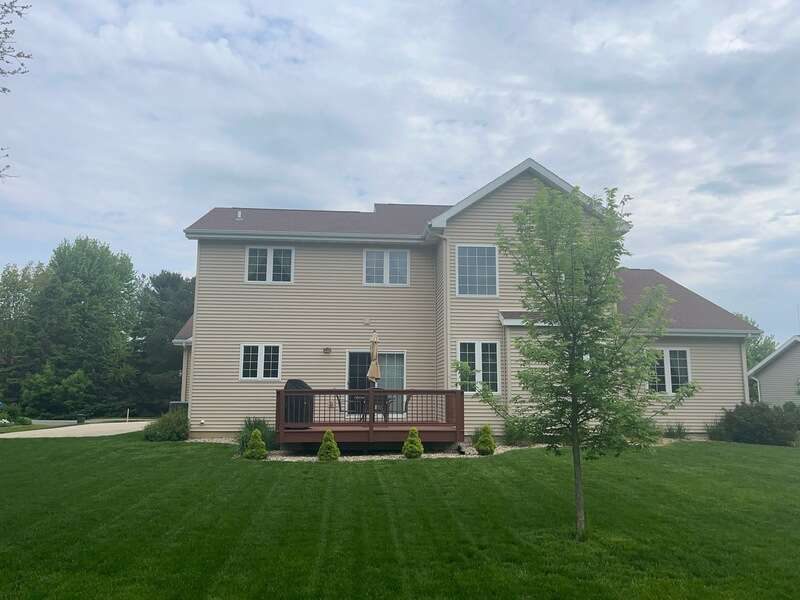
Look at the roof edge from the street: if you see crown molding or cornice where a gutter would hang, and no visible trough, the gutter is likely built in. From a ladder, you would look down into a wide, shallow metal-lined channel at the roof edge. Homes from the 1880s through the 1930s are the usual candidates in Wisconsin and Iowa.
Get My Free Estimate →If your home was built before roughly 1940 and the gutters seem to be part of the roof itself - no aluminum trough hanging off the edge - you have built-in box gutters. Here is the short version of the decision you are facing: a sound box gutter with a failing lining should be relined, not ripped out; a rotted one needs rebuilding or conversion to modern gutters; and the one thing you should never do is caulk it and hope, because a box gutter leaks directly into your house, not onto the ground.
Older neighborhoods around Madison, and historic districts across southern Wisconsin and Iowa, are full of these gutters - and full of homeowners who have been told three contradictory things by three contractors. This is the honest decision framework we use when we put eyes on one.
What a box gutter actually is
A box gutter (also called a built-in or Yankee gutter) is a wooden trough built into the roof structure at the eaves, hidden behind the cornice or crown molding, and lined with metal - historically tin or terne, later galvanized steel, copper on finer homes. From the street you see clean rooflines with no visible gutter, which is exactly why the builders used them.
The important difference from modern gutters: a hanging aluminum gutter that fails drips on your flowerbeds. A box gutter that fails pours water inside the cornice, down through the rafter tails, and into the wall cavity. By the time you see a stain on an upstairs ceiling or peeling paint on the cornice, water has usually been traveling for a while. That asymmetry drives every recommendation below.
Why they fail
Box gutter failures are lining failures, structure failures, or design abuse - usually in that order.
Lining failure. Metal linings expand and contract through Wisconsin and Iowa freeze-thaw cycles for decades. Soldered seams crack, pinholes open, low spots pond. An original lining that is 80 or 100 years old owes nobody anything.
Structure failure. Once the lining leaks, the wooden trough beneath rots quietly. Soft fascia, sagging gutter floors, and rafter tail rot follow. This is the expensive stage.
Design abuse. The most common sin we see: a previous owner filled the box gutter with tar, sprayed foam into it, or roofed straight over it. Tar buys a season or two, traps water against the wood, and turns a lining job into a carpentry job. If you are reading this before doing that - do not do that.
Repair, line, or replace: the honest framework
Reline it when the wooden trough is sound and only the metal is done. The gutter is cleaned out, low spots are corrected, and a new waterproof lining goes in - modern EPDM rubber membrane on a budget, soldered metal where historic fidelity matters, copper where it should last another lifetime. A good relining preserves the original roofline and is the standard answer for a structurally healthy box gutter.
Rebuild it when rot has gotten into the trough or rafter tails but the home's architecture makes the box gutter worth keeping - which, on a historic home, it usually is. Rotted framing and fascia are replaced, the trough is rebuilt to drain properly (original box gutters were often nearly flat; a rebuild adds real pitch), and a new lining goes over it.
Convert to modern gutters when the box gutters are too far gone and the budget or the house does not justify restoration. The box is decked over and flashed as roof edge, and K-style seamless gutters hang conventionally. It changes the roofline's appearance, and on a home in a designated historic district, exterior changes like this may need approval from the local preservation body before work starts - check first; a legitimate contractor will know to ask.
What we will not do is quote any of these from the sidewalk. Which bucket your gutters are in depends on what is under the lining, and that takes an inspection - ours is free, comes with photos of exactly what we found, and carries no obligation.

Want a straight answer on your roof?
We'll inspect it, document everything, and tell you honestly what you're looking at, even if the answer is patch it for now. No pressure.
What box gutter work costs
Honest ranges, because box gutters vary enormously: relining with EPDM membrane is typically the most affordable path and commonly runs in the low thousands for a full run; soldered metal or copper relining costs multiples of that, priced by the foot and the metal; structural rebuilds are carpentry plus lining and are quoted after the rot is mapped; conversion to seamless K-style is often comparable to relining once decking and flashing are included. Every one of these beats the cost of the alternative - cornice rot, wall cavity moisture, and interior plaster damage from a gutter that leaks inward.
Two things move every box gutter quote: access (second-story cornice work needs staging) and what the tear-out reveals. A written estimate should say how discovered rot will be priced before anyone opens anything up.
Maintenance that actually extends their life
A box gutter asks little, but it asks consistently:
- Clean it every spring and fall - debris holds moisture against the lining and clogs the outlets, and a clogged box gutter overflows inward
- Check the outlets and downspout drops, which clog first and are invisible from the ground
- Walk the attic edge after the first hard winter thaw and look for staining at the eaves
- Have the lining inspected every few years once it passes middle age; pinholes found early are patches, not projects
If you do only one of these, do the cleaning. Most of the ruined box gutters we open up died of clogged outlets, not old age.
Get a straight answer on your Madison roof
Wisconsin storm season and insurance non-renewal letters do not wait. Get a free, no-obligation inspection and an honest assessment of exactly what your roof needs, even if the answer is to wait.