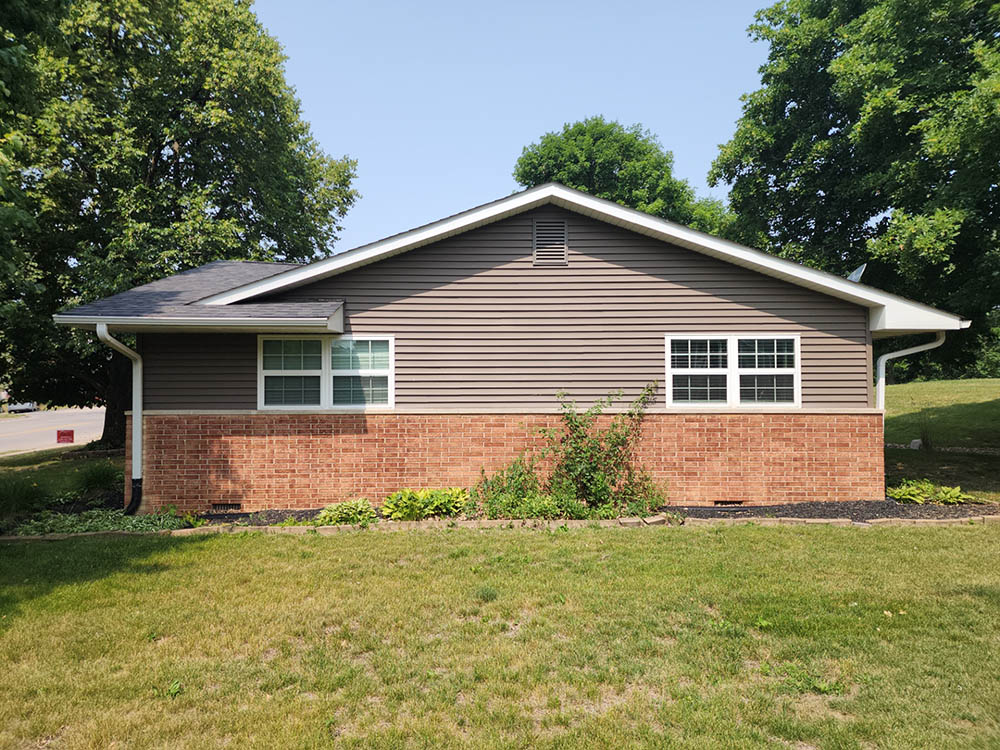
Yes - especially on older or cheaper vinyl. Look for circular cracks, dents, or spiderweb fractures. Large hail (1" or bigger) can punch clean through thinner panels. Even if a dent looks minor, cracked siding lets moisture behind the wall, which causes rot and mold over time.
Get My Free Estimate →The storm rolled through Tuesday night. By Wednesday morning your yard was a mess - branches down, maybe a dented garbage can - but your house looks fine from the street.
Here's the thing: siding storm damage doesn't always announce itself. And in south-central Wisconsin, where a single June storm can drop golf-ball hail on Janesville and be done before the 10 o'clock news, a lot of homeowners walk right past real damage without knowing it.
This guide will show you exactly what to look for, what it means, and when you need a professional set of eyes before you call your insurance company.
Why Wisconsin Storms Are Especially Hard on Siding
Dane, Rock, and Green counties sit in a part of the state that gets hit from multiple directions. Cold fronts driving down from the northwest. Warm, humid systems pushing up from the south. When those two collide in spring and summer, you get the kind of severe weather that produces large hail, high straight-line winds, and sometimes both at once.
Hail above 1 inch is common here. Wind gusts during summer thunderstorms regularly hit 60-80 mph. That combination punishes siding in ways that aren't always obvious - especially on homes with older materials or siding that was installed without proper fastening.
The other Wisconsin-specific problem: freeze-thaw cycles. Even minor siding damage - a small crack, a lifted edge - lets moisture into the wall cavity. That moisture freezes in January and expands. By March, what was a hairline crack becomes a real problem.
What to Look For: A Room-by-Room Walk Around Your House
You don't need to climb a ladder to start your own inspection. Walk the perimeter of your home and work from the ground up. Here's what each type of damage looks like.
Hail Damage
Hail hits siding at an angle, so you'll typically see more damage on the south and west faces of your home - the sides that face into most of our storm tracks.
On vinyl siding, look for:
- Circular cracks or fractures that look like a spider web
- Dents that cracked the panel surface (vinyl gets brittle with age and cold)
- Chips or punch-throughs on thinner or older panels
- A dull, scuffed appearance where the surface sheen has been knocked off
On fiber cement siding (like HardiePlank), hail damage is subtler:
- Small chips or divots at impact points
- Cracked paint that exposes raw board underneath
- Dents at corners or along trim edges
On wood or engineered wood, watch for:
- Splintered or gouged surfaces
- Dents with raised edges around the impact point
- Accelerated paint failure at impact sites
If you find damage on your siding, check your roof for hail damage too - they almost always go together.
Wind Damage
Wind damage shows up differently than hail. Instead of impact marks, you're looking for structural failures.
- Lifted or bowed panels - Wind gets under the bottom edge of a panel and lifts it. Even if it snaps back into place, the locking seam may be broken.
- Missing sections - Trim pieces, J-channel around windows, and corner posts are the first things to blow off in high wind.
- Cracked or separated seams - Where two panels overlap or meet at a corner, wind stress can open up gaps.
- Wavy or buckled runs - A long run of siding that suddenly looks wavy after a storm may have had fasteners pulled loose.
Walk the perimeter and look at the base of your house too. Blown-off pieces often land in the shrubs or against the foundation.
Debris Impact Damage
Hail gets the attention, but a tree branch or airborne debris can do serious localized damage - punched holes, cracked panels, bent trim. These are usually obvious, but check carefully around windows, doors, and corners where debris tends to concentrate.
The Damage You Can't See From the Ground
This is the part most homeowners miss.
A lot of significant siding storm damage is only visible up close. Hail impact marks on fiber cement can be as small as a dime. Cracked vinyl seams are invisible until you're standing a few feet away. Lifted panel edges look fine from 20 feet but are letting water in every time it rains.
That's why a ground-level inspection is a starting point, not a conclusion.
If your neighborhood took a storm - and you can check hail reports by zip code at several weather tracking sites - assume your house needs a proper close-up inspection. Especially if neighbors have had contractors out or have filed claims.
What Happens If You Ignore Siding Storm Damage
We see this every year. A homeowner notices a few dents, figures it's cosmetic, and moves on. Two or three years later, they're dealing with:
- Rot in the wall sheathing behind cracked panels
- Mold in the insulation or wall cavity
- Warped or stained interior drywall
- A much bigger repair bill - and often a tougher insurance conversation because the original storm event is now years old
Siding is your home's weather barrier. When it's compromised, everything behind it is at risk. Wisconsin's winters make that risk worse than in most states.
Want a straight answer on your roof?
We'll inspect it, document everything, and tell you honestly what you're looking at, even if the answer is patch it for now. No pressure.
How Insurance Claims Work for Siding Damage
Wisconsin homeowner's insurance generally covers sudden storm damage - hail, wind, falling trees. But the claims process has some friction points you should know about.
Document before you do anything. Take photos of every damaged section before any repairs are made. Include something for scale - a coin, a ruler - next to hail impacts. Note the date of the storm and save any weather reports.
The matching problem. This is a real issue with siding claims. If hail damages one side of your house, your insurer may only want to pay for that section. But if your siding is 10 years old, that color and profile may be discontinued. You'd end up with a mismatched house. A good contractor knows how to document and argue for a full replacement when matching isn't possible.
Get a contractor on-site before your adjuster visits. This matters. An experienced storm damage contractor knows what adjusters look for and can make sure nothing gets missed or minimized during the inspection. At Buckshot Exteriors, we meet your adjuster on-site - it's part of how we work.
Which Siding Holds Up Best to Wisconsin Weather?
If your siding is damaged and you're looking at replacement, this is worth thinking through.
Vinyl siding is the most common choice - affordable, low maintenance, and decent in most conditions. Thicker panels (0.046" or higher) hold up better to hail. Cheaper, thinner vinyl gets brittle in cold and cracks more easily on impact.
Fiber cement (James Hardie is the dominant brand) is significantly more impact-resistant than vinyl and handles freeze-thaw cycles very well. It costs more upfront but holds paint longer and tends to last 30-50 years with proper maintenance. In Wisconsin's climate, it's a strong long-term value.
Engineered wood (LP SmartSide is the main option) is a good middle ground - better impact resistance than vinyl, less expensive than fiber cement, and factory-primed for good paint adhesion.
Traditional wood is beautiful but requires the most maintenance and is the least forgiving in Wisconsin winters.
If you're replacing storm-damaged siding and want honest advice on which product makes sense for your home and budget, take a look at our siding page - or just call us and we'll talk through it.
If your home took a hit in a recent storm and you're not sure what you're dealing with, now's the time to get eyes on it - not after the next hard rain.
Buckshot Exteriors offers free storm damage inspections for homeowners in Dane, Rock, and Green counties. We've been doing this since 1979, we know what Wisconsin storms do to houses, and we'll give you a straight answer about what needs to be fixed and what doesn't. No pressure, no sales pitch - just an honest assessment.
You can read what our customers say about that approach on our reviews page. Then reach out to schedule your free inspection - before the next storm season gets here.
Get a straight answer on your Madison roof
Wisconsin storm season and insurance non-renewal letters do not wait. Get a free, no-obligation inspection and an honest assessment of exactly what your roof needs, even if the answer is to wait.