
Standing seam handles freeze-thaw more predictably because the concealed-fastener design lets the panels float and expand freely. Stone-coated steel can also perform well, but exposed fasteners on some profiles can loosen over many freeze-thaw cycles if not installed correctly, potentially allowing water infiltration.
Get My Free Estimate →You've done the research. You know asphalt shingles aren't the only option anymore. Maybe a neighbor on your street just got a metal roof, or your insurance agent mentioned a Class 4 impact discount. Now you're staring at two very different products - standing seam and stone-coated steel - and trying to figure out which one actually makes sense for a house in Dane, Rock, or Green County.
Here's the honest answer: both are genuinely good roofs. But they're built on different assumptions about what you want, what your house looks like, and what Wisconsin winters are actually going to throw at them. Let's walk through the real differences.
What You're Actually Comparing
These two products share a steel core. That's mostly where the similarity ends.
Standing seam is a system of continuous vertical panels that interlock at raised seams. Fasteners are hidden inside those seams - you never see a screw head on the surface. The panels float slightly as temperatures swing, which is a big deal in a climate that can go from -15°F in January to 90°F in July.
Stone-coated steel looks more like a traditional roof. The panels are stamped into profiles that mimic shingles, shake, or tile, then coated with an acrylic base and embedded stone granules. From the street, most people can't tell it's metal at all.
Both carry long manufacturer warranties and both can earn a Class 4 impact rating. But how they behave on your roof - and how they fail when they do fail - is quite different.
How Wisconsin's Climate Stresses Each System
Freeze-Thaw Cycles
South-central Wisconsin averages dozens of freeze-thaw cycles per winter. Water gets into tiny gaps, freezes, expands, and pries things apart over time. It's relentless.
Standing seam handles this well by design. Because the fasteners are concealed and the panels clip to the deck rather than being screwed through, the metal can expand and contract freely. There's no fastener hole to work loose, no exposed washer to crack.
Stone-coated steel can also handle freeze-thaw fine - but installation quality matters more. Some profiles use exposed fasteners at the laps. If those aren't properly sealed, or if they're over-driven during installation, you've created a slow leak waiting to happen after a few Wisconsin winters. A good installer knows this. A rushed one might not.
Snow Load and Shedding
Both metal roofs outperform asphalt shingles for snow management. Metal is slick. Snow slides off rather than sitting and adding weight - or worse, melting and refreezing at the eaves.
Standing seam's smooth surface sheds snow aggressively. If you have a walkway or a vehicle near the eaves, you may actually want snow guards, because the whole load can release at once.
Stone-coated steel's textured surface slows that shedding slightly. Still much better than shingles, but the granule texture creates a little more friction. For some homeowners, that's actually a plus - more controlled release.
Hail
Hail is a real concern in Dane and Rock counties. We see damaging storms most summers, and the insurance claims that follow them.
Both roof types can achieve a Class 4 impact rating (UL 2218), the highest available. That matters for insurance discounts and for actual durability.
The difference shows up in how they take a hit. Standing seam panels dent. A significant hail event may leave visible dents, but the paint system (typically a Kynar/PVDF fluoropolymer finish) stays intact. The roof keeps performing. Cosmetic dents on standing seam are often classified by adjusters as non-functional damage - meaning no insurance payout, which is a double-edged sword.
Stone-coated steel can have its granule coating knocked loose by large hail. Once that happens, the exposed steel underneath is vulnerable to rust over time. It's more visible damage, which actually tends to work in your favor on an insurance claim - adjusters can see and document it clearly.
If you're in an area that takes repeated hail hits, think carefully about that distinction. Our storm damage team meets with insurance adjusters on-site regularly and understands exactly how each material gets documented.
Appearance and Curb Appeal
This is genuinely personal, but it's worth being direct about.
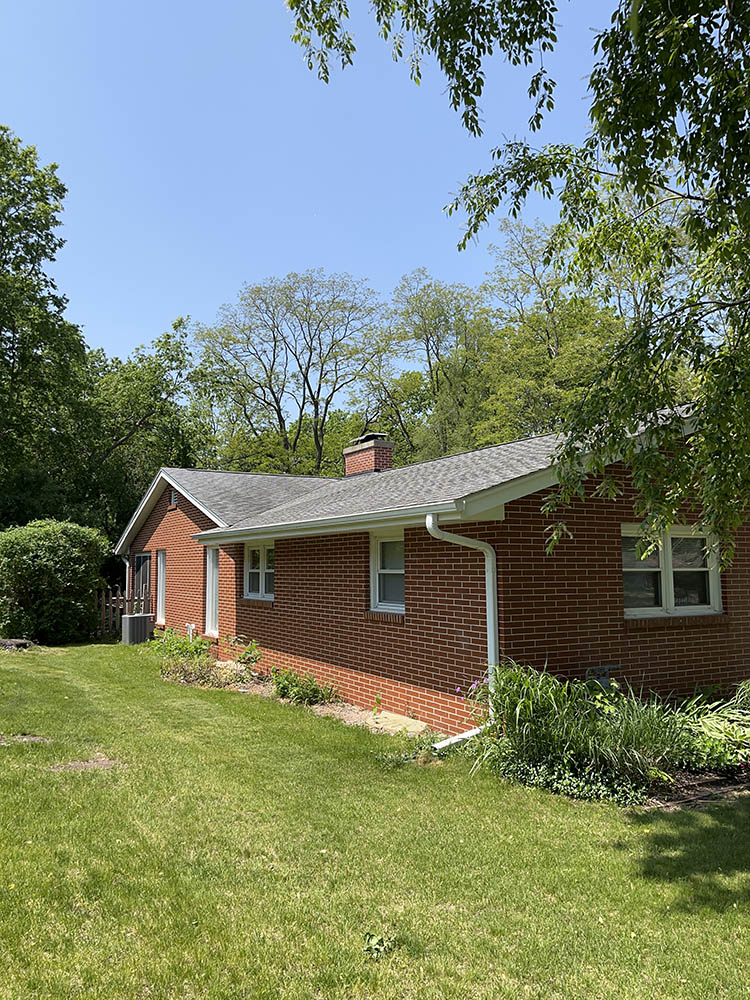
Standing seam has a clean, modern, architectural look. It reads as metal roof from the street. In Madison's older neighborhoods - Nakoma, Maple Bluff, Monona - it can look out of place on a 1950s ranch or a Victorian. On a contemporary home, a farmhouse, or a commercial building, it looks sharp.
Stone-coated steel blends in. It can match the aesthetic of a neighborhood where everyone else has shingles, while quietly outperforming them for the next 40 years. If you want the performance of metal without the visual statement, this is your product.
Neither is objectively better. But your HOA, your neighborhood, and your own taste all matter here.
Installation Complexity and What Can Go Wrong
Standing seam requires trained installers. The panels are typically roll-formed on-site or custom-ordered, the clips have to be set correctly, and the trim details at ridges, valleys, and penetrations are unforgiving. A shortcut at a pipe boot or a valley flashing shows up as a leak within a year or two.
Stone-coated steel is more forgiving to install, but "more forgiving" doesn't mean "easy." Lap directions, fastener placement, and starter course details still have to be right. The mistake we see most often from less experienced crews: improper sealing at the eaves and rakes, which lets wind-driven rain work under the panels.
Both products reward experienced installers and punish careless ones. If a crew is quoting you a metal roof at a price that seems too good, ask how many metal roofs they've installed in the last year. Ask to see a reference job you can drive by.
For residential roofing in south-central Wisconsin, experience with both systems - and with Wisconsin's specific weather patterns - matters more than a low bid.
Want a straight answer on your roof?
We'll inspect it, document everything, and tell you honestly what you're looking at, even if the answer is patch it for now. No pressure.
Cost: What to Expect
Standing seam runs higher. Installation is more labor-intensive, the material is typically more expensive per square, and the custom trim work adds time. It's a premium product with a premium price.
Stone-coated steel bridges the gap between high-end asphalt and full standing seam. You're getting metal roof longevity - 40 to 50 years is realistic with proper installation - at a cost that's often closer to a top-tier asphalt shingle job than to standing seam.
Neither product has a fixed price we can quote here - roof complexity, pitch, existing layers, and current material costs all move the number. What we can tell you is that a written, itemized estimate from a reputable contractor is the only number worth trusting.
A Quick Note on Warranties and Who Installs Them
Manufacturer warranties on metal roofing are only as good as the installer behind them. Most require certified or credentialed installers to be valid.
Buckshot Exteriors is a GAF Master Elite contractor - a certification that requires ongoing training, insurance verification, and performance standards. It's not something every contractor in Madison can claim, and it means the warranties we install are backed by both the manufacturer and our own accountability.
We've been doing this since 1979. That's not a marketing line - it means we've seen what holds up through 40-plus Wisconsin winters and what doesn't.
Not sure which direction makes sense for your house? Give us a call or reach out here for a free inspection and estimate. We'll look at your roof, your pitch, your neighborhood, and your goals - and give you a straight answer, not a sales pitch.

So Which One Should You Choose?
Here's a simple way to think about it:
- Choose standing seam if you have a low-slope section, you want the cleanest possible snow shedding, you like the modern aesthetic, or you want the most maintenance-free system over the long haul.
- Choose stone-coated steel if you want metal performance with a traditional look, you're working with a tighter budget, or you want a roof that blends into your neighborhood.
Both are excellent choices for Wisconsin's climate when installed correctly. The bigger variable isn't the product - it's who puts it on.
We've been helping homeowners in Madison, Janesville, Monroe, and the surrounding counties make decisions like this for over four decades. We know these products, we know the local weather, and we know what insurance adjusters are looking for after a storm.
Ready to figure out which metal roof is right for your home? Contact Buckshot Exteriors for a free, no-pressure inspection and estimate. We'll walk your roof with you, answer every question you have, and give you a clear picture of your options - in writing, before you commit to anything.
Get a straight answer on your Madison roof
Wisconsin storm season and insurance non-renewal letters do not wait. Get a free, no-obligation inspection and an honest assessment of exactly what your roof needs, even if the answer is to wait.