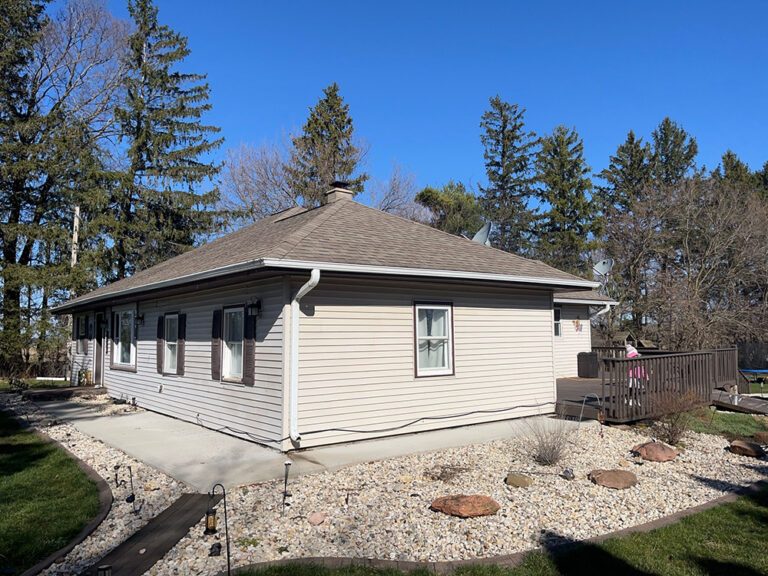
Twice a year is the sweet spot: once in spring after freeze-thaw and ice season, once in fall before snow flies. Add a quick look after any storm with hail, high wind, or a big limb down. Wisconsin roofs age faster than roofs in mild climates because of constant freeze-thaw cycling, so two checks a year catches problems while they are still cheap to fix.
Get My Free Estimate →- Start From the Ground: What You Can See in 10 Minutes
- Gutters and Drainage
- Now Go in the Attic (This Is Where the Truth Lives)
- After a Storm: The Hail and Wind Checklist
- How Long Should a Madison Roof Actually Last?
- What You Can Handle vs. What Needs a Pro
- Repair or Replace, and What It Usually Costs Around Madison
- The Insurance Part Nobody Explains
- What Our Free Inspection Actually Involves
- How to Vet a Roofer (and Spot a Storm Chaser)
- Get a Second Set of Eyes, Free
- FAQs
You can catch most roof problems yourself, from the ground and from your attic, in about 30 minutes. You don't need a ladder, and you definitely don't need to walk the roof.
Below is the same roof inspection checklist we run through mentally when we pull into a driveway in Madison, Sun Prairie, or Verona. Work top to bottom, write down what you find, and take pictures. Pictures matter later, especially if a storm claim comes into it.
Print this page or screenshot the two short lists near the end and keep them in the garage. That way the spring and fall walk-around actually happens.
One honest caveat up front: hail bruising and flashing failures often cannot be confirmed from the ground. That part needs a ladder and a trained eye. Everything else here you can handle on your own.
Written and reviewed by the Buckshot Exteriors estimating team: GAF Master Elite certified, licensed Wisconsin dwelling contractor (DSPS credentials available on request), inspecting roofs in Dane County since 1979.
Start From the Ground: What You Can See in 10 Minutes
Walk your whole perimeter, slowly, and look up. Binoculars help more than anything else you own.
Shingle condition. You are looking for four things:
- Missing shingles. Any gap showing black underlayment or bare wood is an active problem, not a cosmetic one.
- Curling or cupping edges. Corners lifting mean the shingle has dried out and lost flexibility. Common on 18 to 25 year old roofs here.
- Bald or shiny patches. Granule loss exposes the asphalt mat to UV. Once it is shiny black, that shingle is done.
- Lifted or creased shingles. A horizontal crease across a shingle is wind damage. The seal strip broke, the shingle folded back, and even if it laid back down the mat is fractured. Adjusters look for exactly this.
Roof lines. Sight down the ridge and along the eaves. A ridge should be dead straight and the field flat. Any sag, dip, or wave means something underneath: wet decking, a failing rafter, or too many layers of shingle. On a 1990s two-story off Cottage Grove Road, a visible ridge dip turned out to be three layers of shingle, not a broken rafter. Cheaper news than the homeowner expected, but it still meant a full tear-off.
Flashing. Flashing is the metal that seals transitions where shingles stop. Check chimneys, wall-to-roof intersections, sidewall step flashing, and skylights. Rusted, loose, or caulk-and-pray flashing is the number one leak source we find in older Dane County homes. A big smear of tar or silicone means someone patched a real problem instead of fixing it.
Penetrations. Plumbing vent boots, furnace and bath fan vents, satellite and solar mounts. Rubber pipe boots crack from UV, usually between year 10 and 15, and that small failure turns into drywall, insulation and paint work worth several times the repair.
Moss, algae, and debris. Black streaks are usually algae and mostly cosmetic. Green fuzzy moss is different. Moss holds moisture against the shingle, and in Wisconsin that moisture freezes and pries the shingle apart. Same with maple leaves or pine needles packed into a valley or behind a chimney.
Soffit, fascia, and siding. Peeling fascia paint, stained soffit panels, or bubbling siding under the eaves usually means water is getting behind the gutter or the roof edge.
Gutters and Drainage
Bad drainage damages a roof from the bottom up, and it is the most ignored item on any roof inspection checklist.
- Granules in the gutters. A little is normal, especially on a new roof. Heaps of sand-like grit with bald spots visible above means real deterioration or hail impact.
- Sagging or pulled-away gutters. Ice loads pull gutters off. A gutter pitched the wrong way holds water, freezes, and feeds an ice dam.
- Dents and dings. Aluminum gutters and downspouts are your hail detector. If the gutter face is dimpled, your shingles very likely took hits too.
- Downspout discharge. Water should land at least 4 to 6 feet from the foundation. Wet Madison basements trace back to gutters and grade more often than homeowners expect.
- Ice dam evidence. Ripped-off gutters, thick icicles every January, ceiling stains near an exterior wall. Ice dams are mostly a ventilation and insulation problem, and they are fixable.
Now Go in the Attic (This Is Where the Truth Lives)
The attic tells you more than the roof surface does. Go up on a bright day, bring a strong flashlight, and turn the attic light off once you are in.
Attic Safety First
- Step only on ceiling joists or on a plank laid across them. Drywall will not hold you.
- Wear an N95 or better respirator, safety glasses, gloves and long sleeves. Fiberglass and cellulose dust are miserable.
- If you see loose gray-brown pebbly insulation that could be vermiculite, back out. Older vermiculite can contain asbestos and should not be disturbed.
- Skip it on a hot day. A Madison attic hits 130 degrees plus in July. Go early morning, or wait for a cool day.
- If clearance is too tight to move safely, or the only access is a small hatch over a stairwell, let us look instead. That inspection is free and we do it every day.
Daylight. Any pinpoint of daylight through the roof deck is a hole. Note where it is.
Water stains on the sheathing. Dark rings, streaks, or gray discoloration on the underside of the plywood or on the rafters. Stains directly under a nail, vent, valley, or chimney tell you where the leak is. Old stains are dry with crisp edges. Active leaks are damp and often smell musty.
Soft or delaminating decking. Press up gently with a gloved hand near a stain. If it flexes or feels spongy, the sheathing is rotting and needs replacement during a re-roof. This is why "we'll just shingle over it" quotes are dangerous.
Frost and condensation. In a Wisconsin winter, light frost on nail tips is common. Widespread frost, dripping during a thaw, or matted wet insulation means warm moist house air is getting into the attic and ventilation is not keeping up. That rots decking from the inside and drives ice dams.
Blocked ventilation. Look at the eaves. Insulation stuffed against the roof deck blocks soffit intake, and without intake air a ridge vent does almost nothing. Baffles are cheap and make a real difference.
Mold or dark growth on rafters and deck. Do not just bleach it and move on. Find the moisture source first: a leak, a bath fan dumping into the attic, or missing intake ventilation.
Rusty nails or nail pops. Rust on fasteners means repeated condensation. Nails backing out and tenting the shingles above means deck movement.
Found water stains plus soft decking? Don't guess. That combination usually means water has been running a while. Schedule a free inspection and we will tell you straight whether it is a repair or a replacement. No charge, no pitch.
After a Storm: The Hail and Wind Checklist
South-central Wisconsin gets hail and straight-line wind almost every season, and most homeowners never know they were hit.
Check the soft metals first. Before you look at shingles, walk to your A/C condenser, gutters, downspouts, metal roof vents, window wraps, garage door, and mailbox. Dents in soft metal confirm the hail was big enough to bruise asphalt shingles.
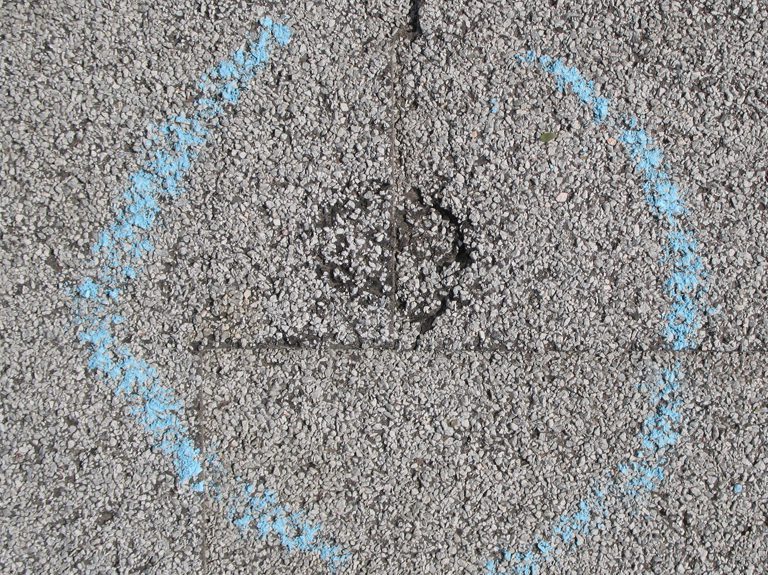
Hail bruising on shingles. A dark spot where granules are knocked away, soft underneath, like a bruise on an apple. Usually no hole, which is exactly why hail claims get missed. On a Sun Prairie ranch a few seasons back, the homeowner had already been told by a door-knocker that the roof was "fine from the ground." The west slope had bruising in a tight pattern and the condenser fins were dimpled. That claim was approved.
Wind damage. Creased shingles, missing tabs, lifted ridge caps, torn or wrinkled shingles along rake edges and the windward slope. Wisconsin wind events often hit one or two slopes rather than the whole roof.
Look at siding, windows, and screens too. Hail travels sideways. Cracked vinyl siding, dented soffit, torn screens and chipped trim all support a claim. We document the whole exterior, not just the roof, when we handle storm damage restoration in Dane County.
Document It Like an Adjuster Will
- Date-stamped photos of every damaged area, wide shot plus close-up.
- The storm date and roughly what happened: hail size, wind direction, time of day.
- The National Weather Service storm report for that date. It ties your damage to a specific event.
- Photos of the dented gutter, the A/C unit, and any hailstones next to a coin for scale.
- Receipts for emergency tarping or board-up work.
On timing: most Wisconsin policies require prompt notice of a loss, and some carriers apply a one-year reporting limit specifically on wind and hail. There is no single deadline that covers everyone, so read your declarations page or ask your agent directly. Waiting a couple of seasons is how legitimate damage becomes an out-of-pocket expense.
How Long Should a Madison Roof Actually Last?
Plainly, in our freeze-thaw climate:
- Old 3-tab shingles: 15-20 years
- Architectural shingles: 22-30 years (the standard on most residential roofing work we do now)
- Class 4 impact-rated shingles: similar life, much better hail resistance
- Standing seam metal: 40-60 years
Ventilation, ice damming, shade, and how well the last tear-off was done can move those numbers several years either way. A shaded north slope in Maple Bluff with moss on it will fail before a sunny south slope on the same house.
What You Can Handle vs. What Needs a Pro
Homeowner-level, do it now:
- Clean gutters and extend downspouts
- Clear leaves and debris from valleys, behind chimneys, and off low-slope sections
- Trim branches so nothing rubs or overhangs
- Add attic baffles, seal obvious attic air bypasses, vent bath fans outside instead of into the attic
Call a pro:
- Any sag or dip in the roof line
- Water stains or soft decking in the attic
- Suspected hail or wind damage after a storm
- Any flashing, chimney, or skylight leak
- A roof past 18 to 20 years, or when you are buying or selling
- Widespread frost or condensation in the attic
A pro inspection covers what you cannot see: fastener patterns, seal strip integrity, valley condition, flashing under the shingle, decking soundness, and whether the shingle grade up there was ever right for this climate.
Want a straight answer on your roof?
We'll inspect it, document everything, and tell you honestly what you're looking at, even if the answer is patch it for now. No pressure.
Repair or Replace, and What It Usually Costs Around Madison
Repair is legitimate when damage is contained: a cracked pipe boot, failed chimney flashing, a few wind-torn shingles, one storm-hit slope on an otherwise sound roof.
Repair is a stopgap when shingles are brittle everywhere, granule loss is widespread, decking is soft, or you are on your third patch in two years. At that point you are paying twice.
Ranges below are based on our own Dane County jobs through 2024 and 2025 on typical 24-30 square roofs. They are not quotes, and material pricing moves, so confirm current numbers when you get an estimate.
- Pipe boot replacement: $250-$500
- Small shingle or flashing repair: $400-$1,500
- Chimney reflash: roughly $700-$2,000 depending on size and access
- Full tear-off and asphalt shingle roof replacement with architectural shingles: commonly $9,000-$18,000, driven by square footage, pitch, layers to tear off, and roof complexity
- Bad sheathing replaced during tear-off: often around $70-$150 per sheet installed
- Class 4 impact-rated shingles and standing seam metal price above that
Financing, honestly. We work with third-party lenders, so approval is credit-based and takes minutes at the kitchen table. Options typically include a short no-interest promotional period and longer fixed-rate terms with a monthly payment. Rates, terms and minimum credit scores are set by the lender, not by us, so ask for the exact terms in writing and compare them against a HELOC before you sign anything. We will always show you the cash price next to the monthly number. More scope detail is on our asphalt shingle roof replacement in Madison page.
The Insurance Part Nobody Explains
ACV vs. RCV. Actual cash value is replacement cost minus depreciation for the age and condition of your roof. Replacement cost value pays the full cost to replace. Most policies here are RCV but pay in two checks: an initial ACV payment, then the held-back depreciation released after the work is complete and invoiced. Some older or higher-risk policies are ACV only, meaning you cover depreciation yourself. Check your declarations page for "roof settlement" or wind/hail endorsements.
Your deductible is yours. If a claim settles at $16,000 with a $2,500 deductible, insurance pays $13,500 and you pay $2,500. Wisconsin's residential contractor law (Wis. Stat. § 100.65) bars a contractor from advertising or promising to pay or rebate your insurance deductible, and inflating an invoice to cover it is insurance fraud. Both are good reasons to walk away from that offer.
Will filing raise my premium? A weather claim is not treated like an at-fault claim, and after a widespread Dane County hail event thousands of neighbors file too. But carriers do look at claim history, and repeated claims can affect renewal. If damage is real and significant, filing is what the policy exists for. If it is one cracked boot, pay cash and skip the claim.
Age alone is not a claim. Insurance covers sudden accidental damage, not a worn-out roof. A 22-year-old roof with no storm event will be denied.
We meet your adjuster on-site and document what we found together. That single step is where most under-scoped claims get corrected. If you have an adjuster appointment scheduled, call the office number at the top of this page and we will work around it.
What Our Free Inspection Actually Involves
45 to 60 minutes, including the attic if you want it checked.
- You do not have to be home for the exterior portion, though we would rather you were there for the photo walkthrough. Attic access does require someone home.
- We do not walk brittle roofs. On older, steep, or cold shingles we inspect from the ladder at the edge and photograph from above. Walking a 20-year-old roof in November creates damage, and we are not doing that to your house.
- You get the photos, plus a straight answer: fine for now, repair, or replace.
- No pressure. If you have five good years left, we will say so.
How to Vet a Roofer (and Spot a Storm Chaser)
After every hail event, out-of-state crews flood Madison neighborhoods knocking doors. Some are fine. Many collect deposits, subcontract to whoever is cheapest, and are unreachable when your ridge vent leaks in February.
- Ask for the Wisconsin DSPS credentials (Dwelling Contractor Qualifier and Dwelling Contractor certification) and a current certificate of general liability and workers comp emailed from the insurer, not printed off a truck.
- Ask for a local address and three Dane County references you can drive past.
- Ask about manufacturer certification. We are a GAF Master Elite contractor, a factory credential a small percentage of roofers hold, which unlocks stronger system warranties.
- Get two warranty answers in writing: how long is the workmanship warranty, and is the shingle warranty transferable to the next owner?
- Never pay in full up front, and never sign an "authorization to inspect" that is really a contract.
- Ask about Class 4 impact-rated shingles. Several carriers writing in Dane County offer a credit on the wind and hail portion of the premium, commonly in the 5-15% range. Credits are carrier-specific, so ask your agent before you choose shingles.
What the job looks like: most Madison re-roofs run one to three days. We pull the permit with the City of Madison or your municipality, and Wisconsin's Uniform Dwelling Code requires ice barrier at the eaves extending at least 24 inches inside the exterior wall line, which matters enormously in our ice dam climate. We tarp landscaping and A/C units, sweep and run a rolling magnet for nails daily, and haul all debris. Gutters get checked and reset or replaced as needed.
Get a Second Set of Eyes, Free
You already did the smart part: you looked. Now let someone who does this every day confirm what you found or catch what you couldn't.
Buckshot Exteriors is locally owned and operated, licensed and insured in Wisconsin, and we have been doing roofing, siding, gutters and storm restoration for south-central Wisconsin families since 1979. Our reviews on Google, Birdeye, Angi and HomeAdvisor come from neighbors in Madison, Middleton, Stoughton and Sun Prairie, and we offer 24-hour emergency storm response when a roof is open and rain is coming.
Call the office number listed at the top of this page, or request your free roof inspection, and we will get someone out to your Madison or Dane County home. The inspection costs nothing, and the answer you get will be the same one we would give our own family.
Get a straight answer on your Madison roof
Wisconsin storm season and insurance non-renewal letters do not wait. Get a free, no-obligation inspection and an honest assessment of exactly what your roof needs, even if the answer is to wait.