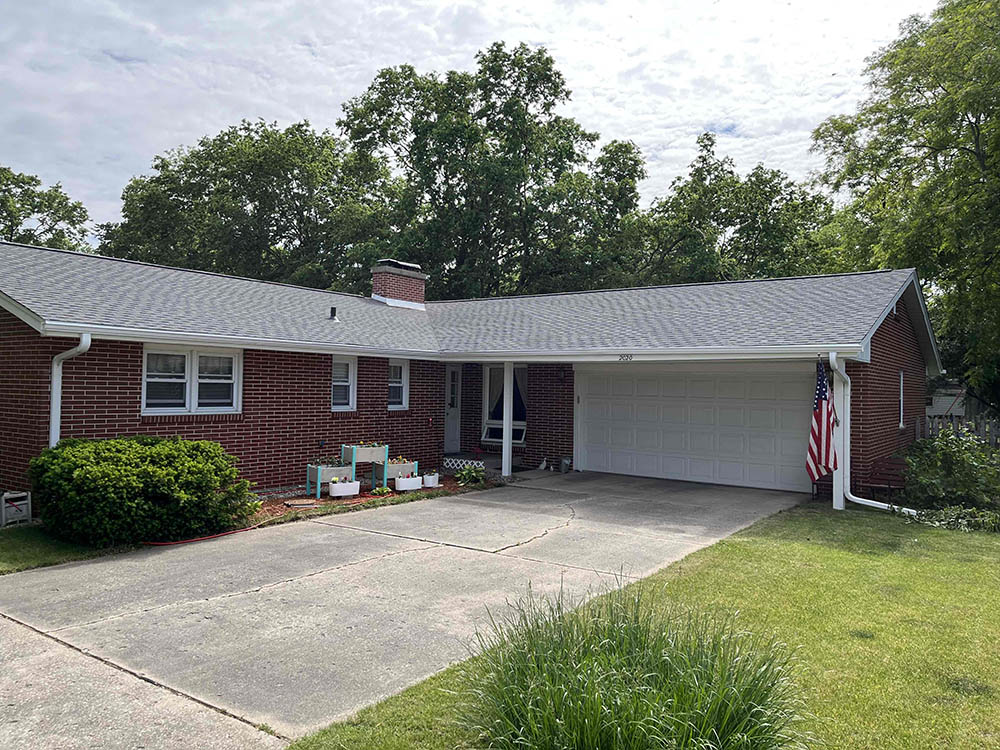
For a typical 2,000 sq ft home, expect roughly $22,000-$35,000 installed for metal shingles and $35,000-$66,000 for standing seam, depending on complexity, tear-off needs, and coating. Exposed-fastener corrugated panels run less ($15,000-$26,000) but are generally not recommended for primary residences due to long-term fastener leak risk.
Get My Free Estimate →- What Does a Metal Roof Cost in Wisconsin in 2026?
- What Drives the Price Up (or Down)?
- Metal vs. Architectural Asphalt: Honest Lifetime Cost Comparison
- Resale Value and Warranty Transferability
- Walking on a Metal Roof and Accessing It Safely
- Repairability and Matching Panels Later
- Common Metal Roofing Myths (Wisconsin Version)
- Maintenance Over the Life of a Metal Roof
- Is Metal Roofing Worth It for Your Wisconsin Home?
- A Note on Getting Quotes in Wisconsin
- FAQs
For a typical Wisconsin home, plan on roughly $22,000-$35,000 installed for metal shingles or $35,000-$66,000 for standing seam. Those ranges assume a 2,000 sq ft house footprint and include labor, materials, underlayment, and basic flashing. The reason most homeowners get confused when pricing metal is that "metal roofing" covers several very different products at very different price points. This guide breaks it all down honestly.
What Does a Metal Roof Cost in Wisconsin in 2026?
The installed price depends almost entirely on which metal roofing system you choose. Here are realistic 2026 ranges for south-central Wisconsin. All examples use a 2,000 sq ft house footprint, which works out to roughly 22-24 roofing squares (one square equals 100 sq ft) once you account for a modest roof pitch.
Exposed-Fastener Corrugated or R-Panel: $7-$12 per sq ft installed
This is the least expensive option. Screws go through the panel face, which means they are exposed to weather. Fine for outbuildings and agricultural work. On a house, the fastener washers eventually dry out and leak, especially through Wisconsin freeze-thaw cycles. Most residential roofing contractors, including our crews at Buckshot, steer homeowners away from this system for a primary residence.
On a 2,000 sq ft footprint: roughly $15,000-$26,000 installed. We include this range for completeness, but it is not a system we recommend for homes.
Metal Shingles or Stone-Coated Steel: $10-$16 per sq ft installed
Metal shingles look like asphalt, wood shake, or tile. They install faster than standing seam, work with standard roofing crews, and carry good warranties. Many qualify for Class 4 impact ratings. The tradeoff is that they have more seams and fasteners than standing seam, so long-term leak risk is slightly higher, though still far better than asphalt.
On a 2,000 sq ft home: roughly $22,000-$35,000 installed.
Standing Seam: $16-$30 per sq ft installed
This is the premium residential system. Panels interlock at raised seams, fasteners are completely hidden, and the roof expands and contracts as one unit. It is the right answer for Wisconsin's temperature swings from -20°F winters to 90°F summers. Properly installed standing seam roofs routinely last 50 years with minimal maintenance, and many manufacturers back their products with warranties in that range.
On a 2,000 sq ft home: roughly $35,000-$66,000 installed, depending on panel width, gauge, and coating.
What Drives the Price Up (or Down)?
Knowing the line items helps you evaluate quotes and spot corners being cut.
Panel gauge. Residential metal roofing typically runs 24 or 26 gauge steel, or 0.032-0.040 aluminum. Thicker gauge (lower number) costs more and dents less. In Wisconsin's hail belt, 24-gauge steel or 0.040 aluminum is worth the premium.
Coating. Kynar 500 (a PVDF fluoropolymer coating) is the gold standard for color retention and corrosion resistance. It costs more than a standard polyester paint but holds color for decades in UV and resists the road salt spray that drifts onto homes near Wisconsin highways. If a quote uses "painted" or "coated" without specifying Kynar, ask.
Roof complexity. A simple gable roof on a ranch house is straightforward. A roof with multiple valleys, dormers, skylights, and steep pitch takes significantly more labor and material. Based on the jobs we run in south-central Wisconsin, complexity add-ons commonly land in the 20-40% range over a base price, though your specific roof may fall outside that window.
Tear-off vs. overlay. Tearing off existing shingles adds roughly $1-$3 per sq ft (a figure consistent with what we see on local jobs) but lets you inspect and replace bad decking. Overlaying saves that cost but hides any rot or soft spots. We almost always recommend tear-off. Metal roofing manufacturers generally advise against installing over existing shingles because trapped moisture and uneven surfaces create problems down the road.
Decking and ventilation. Wisconsin homes with ice dam history often have soft spots at the eaves. Replacing a few sheets of OSB or plywood during a metal roof install is cheap compared to finding rot after the new roof is on. Ventilation also matters more than most homeowners realize: metal roofs are vapor-impermeable, so attic ventilation has to be correct or you can get condensation buildup in cold weather. A good installer will check your attic airflow as part of the estimate, not as an afterthought.
Underlayment. Metal roofing needs a quality synthetic underlayment, not the cheapest felt paper. Some systems also require a self-adhering ice-and-water shield at eaves, valleys, and penetrations. Wisconsin code requires ice-and-water shield at the eaves for good reason: we get ice dams.

Metal vs. Architectural Asphalt: Honest Lifetime Cost Comparison
A quality architectural asphalt shingle roof in Wisconsin costs roughly $9,000-$16,000 installed on that same 2,000 sq ft home. Metal is clearly more expensive upfront. Here is where the math gets interesting.
Lifespan. A well-installed architectural asphalt roof in Wisconsin realistically lasts 20-28 years given our freeze-thaw cycles, UV, and hail exposure. Standing seam metal, properly installed and maintained, is commonly rated for 50 years. Over a 50-60 year period, you might replace an asphalt roof two or three times. The metal roof, in many cases, you install once.
Snow shedding. Smooth metal panels shed snow load on their own. Asphalt holds snow, which adds structural weight and feeds ice dam formation at the eaves. If you have had ice dam leaks or gutters torn off by snow slides, metal changes that equation. One thing to plan for: that snow has to land somewhere. Snow guards, installed over entry doors, driveways, and lower rooflines, prevent large sheets from sliding off at once. It is a relatively small add-on cost and a real safety consideration.
Insurance angle. Class 4 impact-rated metal roofing (look for UL 2218 Class 4 certification) can qualify for insurance discounts from some Wisconsin carriers. Given that Dane County and surrounding counties see several significant hail events most years, that matters. Ask your agent before you sign anything. Savings vary by carrier and are not guaranteed.
Energy. Metal roofs with cool-roof coatings reflect more solar heat than dark asphalt shingles. In Wisconsin, heating costs dominate over cooling costs, so the energy savings are modest compared to southern states. Do not let a salesperson oversell this angle for a Wisconsin home.
If you are planning to stay in your home 15 years or less, the math often favors a quality asphalt roof. If you are staying put for the long haul or this is a forever home, metal's lifetime cost can come out ahead. Our residential roofing team can walk through the numbers with you based on your specific house and situation.
Resale Value and Warranty Transferability
For resale, metal roofing is a neutral-to-positive factor in most Wisconsin markets. Buyers in DeForest, Middleton, Sun Prairie, and similar suburbs increasingly recognize it as a premium feature. The bigger risk is choosing an unusual color that narrows your buyer pool. Stick with neutrals or earth tones if resale is a priority.
One detail worth confirming before you buy: warranty transferability. Many metal roofing manufacturers allow the material warranty to transfer to a new owner, which is a genuine selling point you can document in a listing. Labor warranties from the installing contractor are a different story and often do not transfer. Ask your contractor specifically what transfers, what requires registration, and whether there is a fee. Having that paperwork organized when you sell removes one more question from a buyer's inspection.
Walking on a Metal Roof and Accessing It Safely
Metal roofs can be walked on, but technique matters. For standing seam, foot traffic should land on the flat pan between raised seams, not on the seam itself. Metal shingles typically have designated step areas along the overlap. Improper foot traffic can dent panels, crack coatings, or compromise seals at fastener points.
For practical tasks like installing a satellite dish, servicing a chimney, or hanging holiday lights, hire a contractor who knows the specific system. A roofer familiar with asphalt may not realize how easily a standing seam panel dents under a misplaced knee. If you need to access the roof yourself occasionally, ask your installer to walk you through the safe zones when the job is done. It is a reasonable request and a good installer will not hesitate.
Repairability and Matching Panels Later
Denting is the most common metal roof complaint, usually from hail or a falling branch. The good news is that individual panels on a standing seam roof can often be replaced without disturbing the whole system. Metal shingle sections can also be swapped out.
The challenge is color and profile matching years later. Manufacturers update product lines, adjust color formulas, and occasionally discontinue profiles. A repair done five or ten years after installation may not be a perfect match, especially if the original panels have faded slightly under UV. This is not unique to metal (try matching 10-year-old vinyl siding), but it is worth knowing.
The practical fix: document your panel specs at installation. Keep the product name, manufacturer, color code, gauge, and coating type somewhere you can find it. A photo of the product label works fine. That information makes a future repair contractor's job much easier and gives you the best shot at a close match.
Want a straight answer on your roof?
We'll inspect it, document everything, and tell you honestly what you're looking at, even if the answer is patch it for now. No pressure.
Common Metal Roofing Myths (Wisconsin Version)
"Metal roofs are loud in rain and hail." Not on a house with solid decking underneath. The sheathing, insulation, and attic space absorb sound. The noisy tin-roof reputation comes from pole barns and old agricultural buildings with nothing under the metal.
"Metal roofs attract lightning." Metal conducts electricity, but it does not attract lightning. Lightning strikes the tallest point in an area, not the most conductive material. Metal roofs are actually safer in a lightning strike because they are non-combustible.
"Metal roofs rust." Galvalume steel and aluminum do not rust under normal conditions. Bare steel would, but residential metal roofing uses coated substrates specifically to prevent corrosion. Kynar-coated Galvalume panels carry long-term finish warranties from major manufacturers, often 40 years or more depending on the product.
Maintenance Over the Life of a Metal Roof
Metal roofing is genuinely low-maintenance, but low-maintenance is not no-maintenance. Here is what to expect.
- Gutters. Metal roofs shed debris faster than asphalt, so gutters may fill more quickly after storms. Clean them at least twice a year.
- Seam and fastener checks. Standing seam systems have hidden fasteners, but even they benefit from a visual check every few years. Exposed-fastener systems need periodic inspection of washer condition after harsh winters.
- Snow guards. Check that brackets are secure after heavy snow seasons. They take real force when a large snow load releases.
- Penetrations and flashing. Chimneys, vents, and skylights are where most metal roof leaks eventually develop, not in the panels themselves. Keep an eye on sealants at penetrations and have them inspected if you notice any staining on interior ceilings.
A quick annual visual inspection from the ground, plus a professional check every 5-10 years, keeps small issues from becoming expensive ones.
Is Metal Roofing Worth It for Your Wisconsin Home?
Metal roofing is worth the investment when:
- You plan to stay in the home long-term (10+ years, ideally 20+)
- You have had repeated ice dam or snow-load problems
- You want to stop the cycle of re-roofing every 20-25 years
- You want a Class 4 impact rating for potential insurance savings
- The home is in an area with significant hail exposure (most of south-central Wisconsin qualifies)
Metal roofing is probably NOT the right call when:
- You are selling the home in the next few years and the buyer is unlikely to pay a premium for it
- The home has significant structural issues that need to be addressed first
- Budget is the primary constraint and a quality asphalt roof will serve you well
For homeowners interested in the highest-rated storm-resistant options, our FORTIFIED roofing program is also worth a look alongside metal.
Thinking through the numbers? Reach out to our metal roofing team for a real estimate on your specific home, not a ballpark from a website.

A Note on Getting Quotes in Wisconsin
Get at least three quotes. Make sure each one specifies the panel system, gauge, coating type, underlayment brand, whether tear-off is included, and what warranty covers both materials and labor. Vague quotes are a red flag.
Ask how long the contractor has been installing metal specifically. Metal roofing is not the same as asphalt shingle work. The flashing details, thermal movement allowances, ventilation requirements, and fastening patterns are different. A crew that installs metal twice a year is not the same as one that does it regularly.
If your existing roof was damaged in a recent storm, this is also a good moment to consider upgrading to metal rather than replacing in kind. Our storm damage restoration team works with insurance adjusters regularly, and in some cases a Class 4 impact-rated metal roof can be partially supported by a claim plus a modest upgrade payment from you. We meet adjusters on-site and help document everything.
We have been roofing in south-central Wisconsin since 1979. We know what these roofs go through, and we know what a properly installed metal roof looks like 20 years later. If you are serious about metal, we would be glad to come out, measure your roof, walk through the system options that make sense for your house, and give you a written estimate with no pressure.
Call Buckshot Exteriors at (641) 895-4048 or contact us online to schedule your free metal roof estimate. Straight answers, no sales pitch.
Get a straight answer on your Madison roof
Wisconsin storm season and insurance non-renewal letters do not wait. Get a free, no-obligation inspection and an honest assessment of exactly what your roof needs, even if the answer is to wait.